
Japanese Design Archive Survey
DESIGN ARCHIVE
Designers & Creators
Hiroshi Ishibashi
President, Ishibashi Foundation
Director, Artizon Museum
Chairman, AXIS Inc.
Interview: 18 September 2025, 15:00–17:00
Location: Ishibashi Foundation
Interviewee: Hiroshi Ishibashi
Interviewers: Yasuko Seki, Aia Urakawa
Author: Yasuko Seki
PROFILE
Profile
Hiroshi Ishibashi
President, Ishibashi Foundation
Director, Artizon Museum
Chairman, AXIS Inc.
1946 Born in Fukuoka Prefecture
1964 Studied in the United States (until 1971)
1971 Completed studies at Art Center College of Design (Los Angeles)
1973 Joined Bridgestone Tire Co., Ltd. (now Bridgestone Corporation)
1981 Established Axis Inc.
1994 Auditor, Bridgestone Corporation (until 2012)
2004 President, Ishibashi Foundation
2014 Director of Bridgestone Museum of Art
2020 Artizon Museum (formerly Bridgestone Museum of Art) opened
2023 Awarded the Personality Prize 2023 at the Red Dot Design Award, Germany

Description
Description
For modern design to take root in a country, it requires a considerable amount of time. First, there must be an industry in which design can flourish, designers must be given opportunities to excel, the designs they create must reach consumers in the form of products and services, and mechanisms must be established to communicate and educate about the value and usefulness of design. Furthermore, it is essential to cultivate an environment where these elements circulate smoothly. Central to this cycle were visionary leaders who served as its engines. Examples include Konosuke Matsushita, who established Japan's first in-house design department proclaiming ‘the era of design is upon us’; Masaru Ibuka and Akio Morita, who understood design's utility from their company's founding and positioned it as a vital management resource; and Soichiro Honda, himself a master designer.
Hiroshi Ishibashi is one of the few founders in Japan who, while inheriting their lineage, has realised his vision through a distinct approach. As the third-generation founder of Bridgestone and the Ishibashi Foundation (the operating body of Artizon Museum), he experienced an enrich lifestyle in America while studying design. He has realised his ‘ ambition to spread design in Japan’ from various positions. At Bridgestone, he established the design department, promoted corporate identity and marketing, and positioned design as a management resource. At AXIS, he implemented diverse media and projects from a producer's perspective, enlightening others to design's utility. Through the Ishibashi Foundation's museum management, he is pioneering new horizons for art that encompasses design. There, beyond mere preservation, a consistent focus on creating a highly precise environment essential for realizing their vision is achieved through “soft power” such as design and culture. In 2023, he was awarded the prestigious German Red Dot Design Award、Personality Prize in recognition of his long-standing achievements.
Now, at a time when design is expected to open up new horizons, the kind of perspective and drive embodied by Ishibashi is needed more than ever. In this interview, he spoke about his passion for design through the many achievements he has accumulated over the years. It once again became clear that his trajectory is closely intertwined with the very development of Japanese design.
Masterpiece
Major Projects
Establishment of AXIS Inc. (1981)
・Opening of Roppongi AXIS Building
・Launch of design magazine “AXIS”
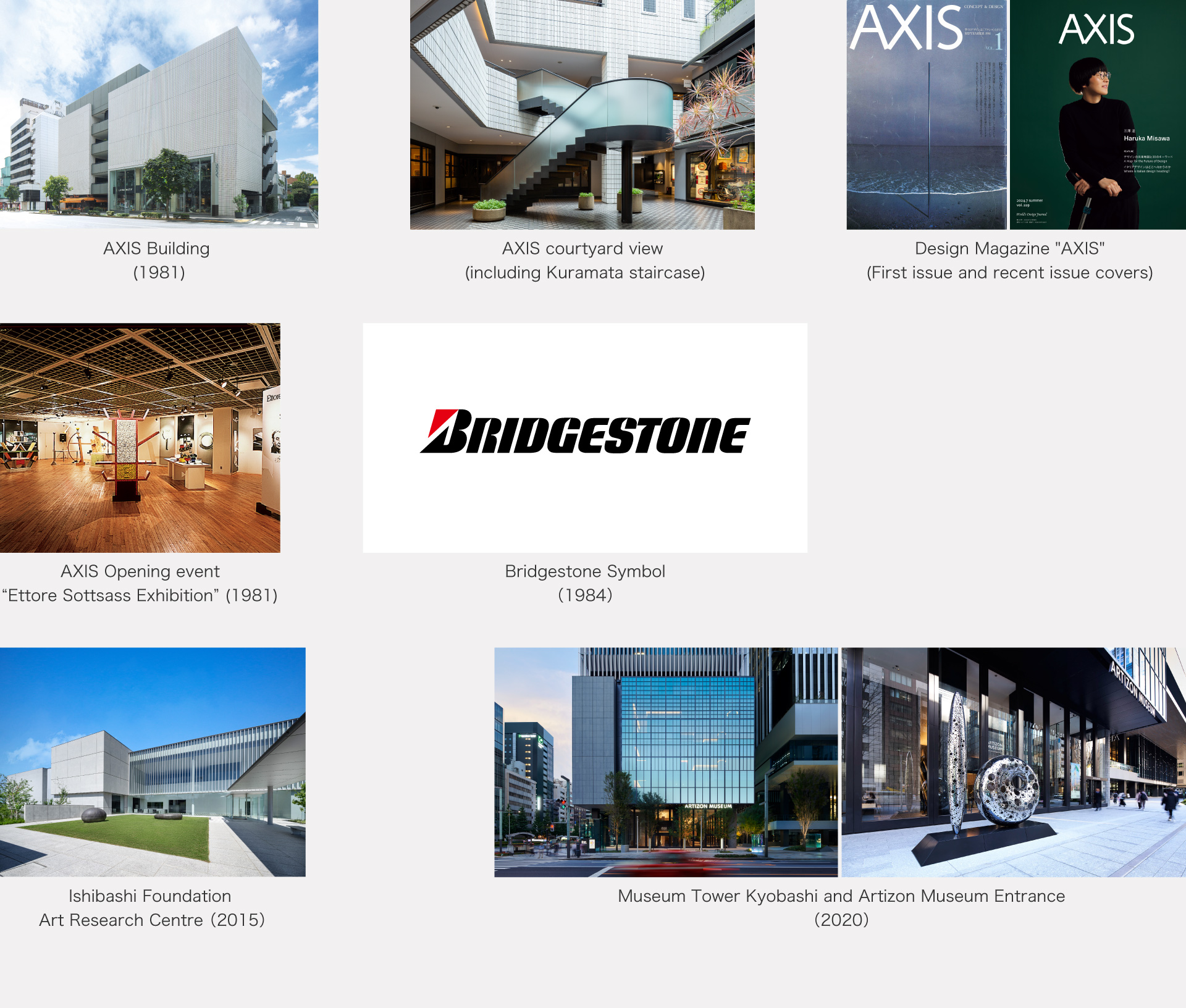
Implementation of Corporate Identity System for Bridgestone Corporation (1984)
Renovation and Opening of Bridgestone Museum of Art (1999)
Completion of the Ishibashi Foundation Art Research Centre (2015)
Completion of Museum Tower Kyobashi (2019)
Opening of the Artizon Museum (2020)
Completion of the Ishibashi Foundation Art Research Centre Extension (2025)
Interview
Interview
Stand Still and You’ll Be Left Behind
— Progress Is the Only Way Forward.
Aspiring to be a Car Designer
ー Congratulations on winning the 2023 *Red Dot Design Award. From the 1970s to the present day, Mr Ishibashi has launched numerous ventures from scratch through Bridgestone, AXIS, and the Artizon Museum (formerly the Bridgestone Museum of Art), exerting a profound influence on the design world. Today, we wish to hear your thoughts and practices from your perspective as the founder of these ventures, and further discuss design museums and archives.
First, you are the third-generation founder of the former Bridgestone Museum of Art, renowned for its collection of Impressionist and modern Western-style painting in Japan. What prompted you to shift your activities to focus on “design”?
*The Red Dot Design Award is a globally prestigious international design prize established in Essen, Germany, in 1955. It is awarded across three categories: Product Design, Brand and Communication Design, and Design Concept.
Ishibashi My interest in design began during my junior high school years. My family background was quite ordinary, but I recall my father (Kanichiro Ishibashi) being fond of Scandinavian furniture. He developed a rubber leaf spring called the “Vitafram” and would place orders with furniture manufacturers. I myself have been fond of cars since childhood, and that may well have been the catalyst for my growing fascination with design.
ー In your discussions with design consultant Gordon Bruce and artist Tomoko Konoike, you mentioned that your grandfather, Shojiro, and your father, Kanichiro, were car enthusiasts.
So, car passion runs through three generations of your family.
Ishibashi My grandfather, Shojiro, was such a car enthusiast that he purchased Kyushu's first private motorcar shortly after taking over the family business in Kurume City, Fukuoka Prefecture. However, in later years, his position as a business owner apparently led him to refrain from driving himself. My father, Kanichiro, too, was clearly someone interested in car design; one evening, when I peeked into his study, I found him intently collaging photographs of early Prince Gloria models.
Meanwhile, around 1960, as my grandfather was involved in the management of Prince Motor Company, Ltd. (which merged with Nissan Motor Co., Ltd. in 1966), my father once took me to their factory in Ogikubo. There stood a turquoise blue “Prince Skyline Sports”, designed by Giovanni Michelotti, which had just returned from the Turin Motor Show. I was utterly captivated by its vivid colour and design, and by the time I was in secondary school, I had started sketching cars myself. Later, I found the Ferrari P series racing cars incredibly stylish and sketched them diligently, though I struggled to capture the rounded aerodynamic lines effectively. Around that time, I learnt by watching my father draw three-view drawings. Learning this technique allowed me to express them successfully on occasion. Still, it remained purely a hobby; I never considered becoming a designer.
ー After that, you went to study in America and enrolled at the Art Centre College of Design (ACCD) in Pasadena, Los Angeles, in 1969 to study car design. ACCD is known as a school that has produced many car designers.
Ishibashi I was enrolled at ACCD from 1969 to 1971. Having arrived in America in 1964, I entered an American university after high school and completed my liberal arts studies. When considering what to major in and what career I wanted for the future, I found myself increasingly drawn to the idea of pursuing design. I chose to specialise in car design partly because I loved cars, but also because I thought the skills would be useful in some capacity, even if I didn't become a designer. After graduating, I intended to work as a car designer in Detroit, the heart of the American automotive industry. However, the Vietnam War had caused public safety to deteriorate significantly, forcing me to return to Japan.
Sowing the seeds of design at Bridgestone
ー And so you began your career based at Bridgestone Tire (now Bridgestone).
Ishibashi After returning to Tokyo, I began working on designing aluminium alloy wheels for tires. My prior studies in industrial design, undertaken in anticipation of such a situation, proved invaluable. My career commenced first at Bridgestone Cycle Co., Ltd., later transitioning to an in-house designer role at Bridgestone Tire.
ー Was there a dedicated design department within the company at that time?
Ishibashi There was no design department as such. The closest equivalent was the advertising department, but creative work was largely outsourced, with final decisions made by President Kanichiro. In this environment, our initial projects involved designing aluminium wheels, chemical products, and fibreglass reinforced plastic (FRP) bathtubs. Initially, a “design group” was established at the Kodaira Technical Centre, later relocating to the headquarters in Kyobashi.
Initially, I was involved with Bridgestone Cycle. I met Mr Eiji Hayashi, then their Design Department Manager and later Editor-in-Chief of AXIS magazine, who taught me about the role and practicalities of in-house design. For instance, as the aluminium wheels I was responsible for were cast, he took me to visit the casting and related component production sites. Through this experience, I recognised that in industrial design, knowledge and insight into the production line, manufacturing processes, and the actual site are indispensable.
ー I too learnt many things from him during my time at AXIS. Do you have any other anecdotes?
Ishibashi One was “product comparison”. It meant not just presenting designs, but thoroughly comparing and analysing rival products. Also, we always obtained two copies of magazines or catalogues: one to take apart, cut up, and paste together, understanding through hands-on work. It was truly the product planning process.
ー When presenting design proposals, one should prepare at least two options: Plan A (aligning with company policy) and Plan B (the vision one personally wishes to realise).
Ishibashi He also emphasised that ‘even as an in-house designer, one must maintain a rebellious spirit—yet that sentiment must never exceed fifty per cent.’ Mr Hayashi was my mentor in design, teaching me not just within the designer's role, but how to conduct myself as a corporate professional and, fundamentally, as a human being.
ー Through this training, you sowed the seeds of design within Bridgestone's organisation.
Ishibashi Yes, that's correct. Crucially, it wasn't just me; new members and designers previously scattered across departments began gathering together, establishing a foothold. Over four or five years, we gradually nurtured these budding design initiatives.
ー So that progression led to the introduction of Bridgestone Tire's corporate identity (CI) and the movement towards changing the company name.
Ishibashi That's right. Around the time the design group was upgraded to the “design office” and relocated to Kyobashi, there was a quiet momentum building within the company for introducing CI. At that time, Bridgestone Tires was entering the motorsports field, and while we were putting the yellow and red Keystone-mark on the racing cars, it didn't convey a sense of speed or dynamism. So we secretly tweaked the mark a few times and got told off by the advertising department. That experience convinced me we needed to review and standardise our marks and logotypes, which is why I pushed for CI implementation.
Meanwhile, from a management perspective, we also needed to adapt to changing market conditions. By the late 1970s, the baby boomers had emerged as the core consumer group for cars and other goods. They were the generation that had shaped post-war Japanese trends, with values vastly different from previous generations. Companies had to change to meet their needs. Coinciding with Bridgestone Tire's 50th anniversary in 1981, the company was at a transformative juncture requiring not only internal restructuring for the new era but also a change in its external image and perception.
ー What role did you play in this?
Ishibashi CI project was easier to advance through top-down rather than bottom-up approaches. As I was also registered with the corporate planning office, I was told to make a proposal, leading to my being sent to Europe for research. There, I visited two companies: Braun in Germany and Olivetti in Italy. I observed their design operations, interviewed design managers, and contemplated the relationship between corporate culture and ethos and design-oriented management. I concluded that implementing CI hinged on how design could be integrated into the corporate philosophy and culture. This required a company-wide, long-term effort to embed it thoroughly. In other words, it wasn't just about one person; the entire company needed to be mobilised comprehensively.
Upon returning to Japan, I prepared a proposal combining the research reports from the two companies and my own ideas, presented it to the management team, and we decided to proceed. However, at that time, neither the term “CI” nor the concept itself was widely recognised. We had no clear starting point, and the Keystone-mark, conceived by the founder and symbolic of Bridgestone Tires, faced significant opposition to any alteration.
ー How was it implemented?
Ishibashi Following my presentation, a CI committee was established within the company, and simultaneously a project team was launched within the corporate planning office. We then met with Motoo Nakanishi of PAOS, a leading authority on CI. He had researched design manuals from Western companies like 3M and IBM. In 1971, he published a book titled “DECOMAS = Design Coordination as A Management Strategy”, arguing that CI required an integrated design strategy within management, and that logos and symbol marks must express the corporate philosophy. He had already achieved results with CI for companies like Mazda and Matsuya Ginza. We resonated with his philosophy and activities, leading to his participation in the project.
The design office also grew in size, gradually establishing an environment capable of handling large-scale projects like CI. Subsequently, the design office relocated to Roppongi as the design center concurrently with the opening of the AXIS Building in 1981. In 1990, it became independent as Iigura Institute Inc, a comprehensive design consultancy firm.
Bridgestone CI Tree
ー In 1984, the company name changed from Bridgestone Tire to Bridgestone, and a new corporate identity (CI) was introduced. This CI has largely retained its original form to the present day. In the early 1980s, while the CI project was underway, preparations were also progressing for the design and television commercials of the tire brands “POTENZA” and “REGNO”. That was branding for tires, wasn't it?
Ishibashi I was involved in marketing at the same time as the CI. The motivation for tackling branding stemmed from research into Braun and Olivetti, with significant social factors being the rise of the baby boomer generation as a key purchasing demographic. From a marketing perspective, “POTENZA”, launched in 1979, was a brand targeting enthusiasts and the sports driving market. While tire development was led by the technical department, the design office also supported the naming and image creation. The “REGNO” brand, announced in 1981, became Bridgestone's flagship brand for luxury vehicles. Its brand design was strategically advanced, encompassing everything from logo development to television commercials targeting new consumer segments and event planning.
ー Both are long-established brands. Sean Connery was cast in the initial advertising campaign for REGNO, which attracted a lot of attention.
Ishibashi Yes, Sean Connery, a global star, possessed a captivating, understated charm. His image perfectly matched REGNO's appeal as an object of aspiration for both the youth and the baby boomer generation at the time. The advertising photographs were taken by Kazumi Kurigami, and it was a thoroughly enjoyable shoot. Around this period, I increasingly had the opportunity to work alongside creative professionals like Motoo Nakanishi and Kazumi Kurigami through my work, which proved immensely educational and stimulating.
Spreading design across Japan with AXIS as the axis
ー At the time, you were in your early thirties. At that age, you established Bridgestone design centre, promoted corporate identity, achieved branding for flagship products, and simultaneously worked on the AXIS project in Roppongi.
Ishibashi The AXIS project began in 1976. The site where the AXIS building stands was significant ground where many Bridgestone-affiliated companies were founded and nurtured. That same year, following the passing of our founder, Shojiro, I was tasked with devising a new venture unlike anything we had attempted before. At the time, Roppongi was gaining attention as a cutting-edge area where young people gathered. However, simply capitalising on this as a rental building business seemed uninspiring. Conversely, making cultural ventures profitable required ingenuity. My initial proposal was to create an open park, an urban oasis. That said, I thought it would be good to incorporate subtle elements indicating Bridgestone's provision, allowing people to sense the company's depth.
ー Recently, Sony Park at Sukiyabashi has been generating quite a buzz, but this idea seemed to anticipate that trend. Might that also be connected to your deep commitment to Bridgestone's corporate culture?
Ishibashi However, the proposal was rejected on the grounds that it wouldn't be financially viable for the park. (laughs) We lacked the know-how, so we also began searching for a consultant to collaborate with. That's when we learned of Hamano Institute Co., Ltd. (hereafter Hamaken), which had produced Kobe's Rose Garden, From-1st in Aoyama, and Tokyu Hands in Shibuya. We met with its representative, Yasuhiro Hamano, and decided to work together. Hamaken possessed a track record in cultural ventures and a network of creators. They introduced us to many designers, including Issey Miyake, Ikko Tanaka, Arata Isozaki, and Shiro Kuramata. Through repeated discussions with them, our direction naturally became clear.
This was a venture to spread design throughout Japan, to create opportunities for people to learn about good design and incorporate it into their lives. It was precisely the realisation of the feeling I first had upon returning from America: “Japan needs more good design”. However, cultural ventures alone were not financially viable. Therefore, half of the building was leased out, and the revenue generated was used to fund activities promoting design. This led to the launch of the design magazine “AXIS”, the organisation of exhibitions at the AXIS Gallery, and the operation of a directly managed design shop. What we'd now call “Producer”, I suppose. AXIS was often described as a design enlightenment movement or even an activist group, but what I truly wished for was simply to spread design throughout Japan.
ー The AXIS, which opened in September 1981, was entirely design-oriented and experimental, as described by its concept of being a “proposal for design and living”.
Ishibashi Its diverse tenants included “Chairs”, the studio and shop of Shigeru Uchida; “Robe de Chambre”, Rei Kawakubo's homewear shop and Yasuo Kondo's first project; “Tint”, Jurgen Lehl 's linen shop; and showrooms for Italian luxury furniture like “Interdecor” designed by Mario Bellini and “Alflex”. The AXIS-operated shop “Living Motif” (hereafter LM) was designed by Kanji Ueki, fresh from Italy, while the car accessories shop “Le Garage” featured interiors by Shiro Kuramata. The entire AXIS Building was a showcase of works by the leading designers of the era.
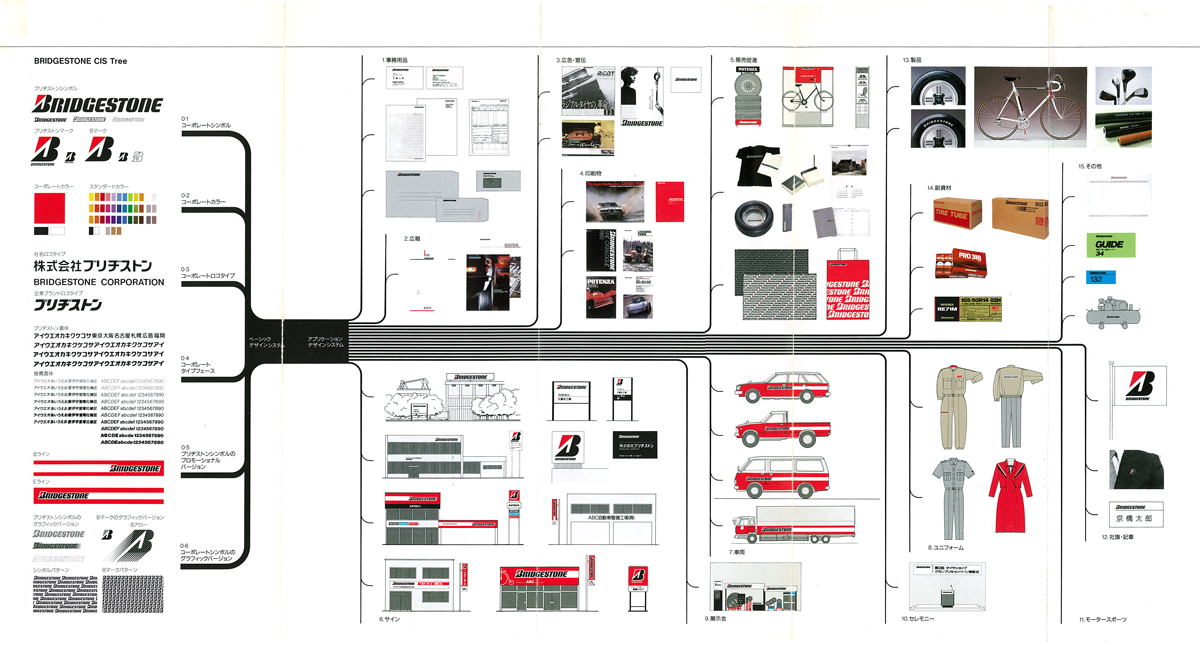
ー The magazine “Japan Interior Design” featured it. The building itself centred around a large atrium with a double-height space, creating a rich environment where the presence of people could be sensed through semi-open passageways leading to the courtyard. It was a building that anticipated the concepts of public and common space. And right in the middle of it all stood the Kuramata Staircase. Was the building itself also your concept?
Ishibashi Financially, it would have been better to build a closed structure filling the entire site, but I thought that would be dull. Consequently, the building's floor area ended up being halved. (laughs)
Another distinctive feature of the AXIS building is that the architecture is open to the city. The first floor continues the street, allowing anyone to pass through freely. Climbing the Kuramata Staircase enables free movement throughout the entire building. To blend into the streetscape, it's a five stories building. The walls facing the street are tiled to prevent falling glass from injuring passers-by in the unlikely event of an accident. The basic architectural design was developed by myself, Bridgestone's in-house designer responsible for space design, and the architectural design firm Architect Design. Construction was carried out by the Takenaka Corporation team.
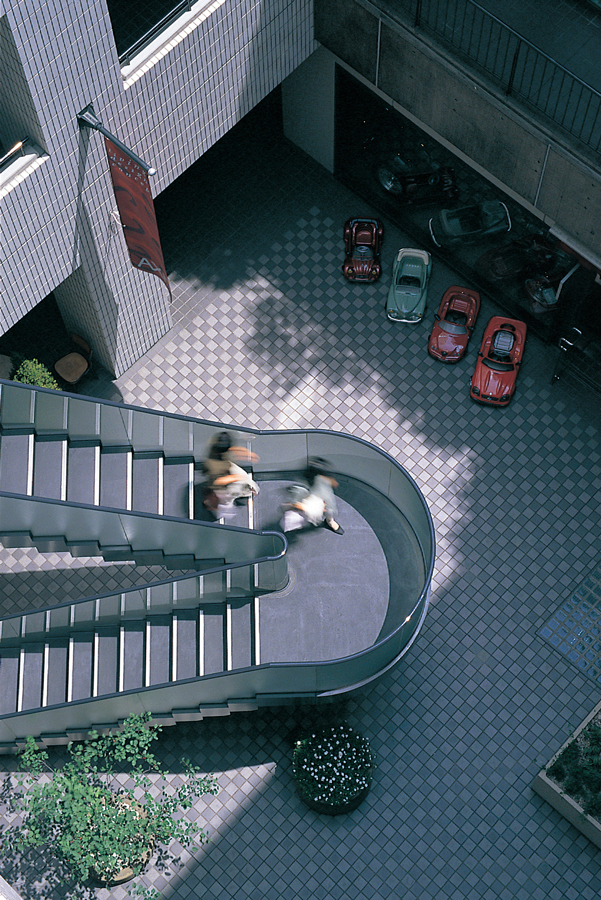
View of the AXIS Building courtyard. The central structure is the Kuramata staircase.
ー That concept was symbolised by the opening slogan, “The Tolerant White Box”.
Ishibashi Yes. It embodied the sentiment of “Please, everyone, do come in”.
ー AXIS at that time could truly be described as a “design museum”.
Ishibashi Initially, we did consider design museum-style ventures, but they proved difficult to make financially viable. Moreover, I felt it wasn't enough to merely exhibit and sell good things. Around that time, lighting designer Harumi Fujimoto suggested, ‘Why not turn the upper floors of the building into a free space equipped with cutting-edge facilities, and hold exhibitions and events there?’ That became AXIS Gallery and Iigura Studio.
ー So it was about considering design not just as “things” but also as “events”. There were places like Tokyo Designers Space and Ao Gallery, later Yamagiwa's In-spiration, where people could meet and something new could emerge. Furthermore, with the terrace restaurant and the café facing the courtyard, it was also intended to be a place where not just designers, but people seeking a rich lifestyle could gather, and where something new could be born.
Ishibashi It was a pioneer of experiential spaces. Fundamentally, the profession of designer is a responsible one, contributing not only to industry but also to society, culture, and daily life by creating new values and objects that did not previously exist in the world. For instance, industrial design must provide users with functionality and psychological satisfaction, while also being easy for companies to manufacture and sell. It demands highly sophisticated thinking, with visualisation being the final stage following various experiments and thought processes. Around 1981, the general public was largely unaware of this, so we wanted to convey it through AXIS and foster recognition.
ー At that time, AXIS carried the sub-catchphrase “Living/Design/Concept”.
Ishibashi When considering design, the “concept” is crucial. Though the term “concept” wasn't commonplace back then, the reason we adopted “Living/Design/Concept” was that living represents “daily life”, design represents “objects”, and concept represents “philosophy” – all equally important. With our directly operated LM shop, we aimed not only to display good design like a museum but also to spread good design by enabling people to incorporate it into their lives through concrete products.
ー Initially, we also developed original goods centred around textiles.
Ishibashi These were original fabrics based on stripes rather than typical floral patterns. We developed items like sheets, linen, and accessories by leveraging Bridgestone design centre and its network. That also aimed to build the shop's character through original products.
ー AXIS served as a spatial medium embodying “Living/Design/Concept”, where leading designers crossed paths and collaborated. Are there any particularly memorable episodes?
Ishibashi AXIS functioned as Japan's design centre from the 1980s through the 1990s, attracting a constant stream of creators from both home and abroad, so it's difficult to single out any one episode. One stands out: the opening event, the Ettore Sottsass exhibition, sparked Japan's postmodern boom. Following that exhibition, Mr Sottsass would visit AXIS whenever he came to Japan, sharing his philosophical insights. Shiro Kuramata, whose studio was nearby, frequently had lunch at A TANTOT and used AXIS as if it were his own garden. Eiji Mitooka, a leading figure in railway vehicle design, was working as an illustrator at the time and drew perspective drawings for the AXIS building and shops. Among the international figures, Ettore Sottsass, Alessandro Mendini, Mario Bellini, Enzo Mari, Giorgetto Giugiaro... the list goes on and on.
ー At AXIS Gallery, we hosted an event called “Automotive Designers’ Night”to welcome the world's leading car designers gathered for the Tokyo Motor Show.
Ishibashi The first one was held around the late 1980s. Japan was riding high on the bubble economy at the time, and the Tokyo Motor Show was hugely successful, attracting top car designers from around the world. However, they had nowhere to gather, so car designer Kunihisa Ito and I took the initiative and organised a reception at A TANTOT. About 20 people gathered, and one of them was Chuck Jordan, who was considered the god of car design, so we were very surprised. This prompted us to name it the “Automotive Designers’Night” and hold it biennially.
ー AXIS magazine also ran special features timed with the Tokyo Motor Show. The focus back then was on car styling, but later shifted to the environment and energy. Looking back, the period from the 1980s to the 1990s may well have been a turning point for design.
Ishibashi AXIS magazine featured “Mobility Design” in 1986, which was ahead of its time.
When AXIS was founded, design had not yet permeated society or daily life; it only became widely established from the mid-1980s. This coincided with the globalisation of Japanese companies and the growing international recognition of the high quality of Japanese products. Japanese fashion designers like Issey Miyake, Yohji Yamamoto, and Rei Kawakubo gained prominence, while companies such as Sony, Honda, Toyota, and Canon were leading the way in industrial design. AXIS was right at the heart of this social trend.
AXIS magazine was honoured at The International Council of Societies of Industrial Design (ICSID) held in Washington DC in 1985. The World Design Expo held in Nagoya in 1989 and the ICSID World Congress represented the very pinnacle of this era. Subsequently, as Japan's bubble economy burst and the 1990s dawned, society entered a period of calm. With digital technology permeating society and daily life, design too entered an era of seeking a different direction from before.
ー And now the need for a design museum is being discussed. In this sense, AXIS Gallery has kept pace with the times, hosting exhibitions such as the Ettore Sottsass Exhibition, Braun Exhibition, Issey Miyake’s A-POC Exhibition, Information Architecture Exhibition, and Super Normal Exhibition, continuously proposing new visions of design.
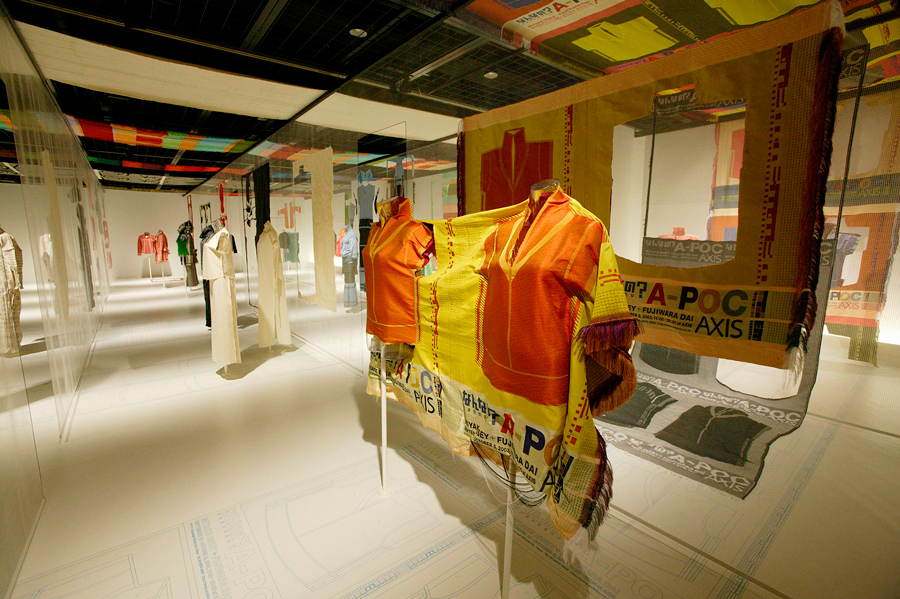
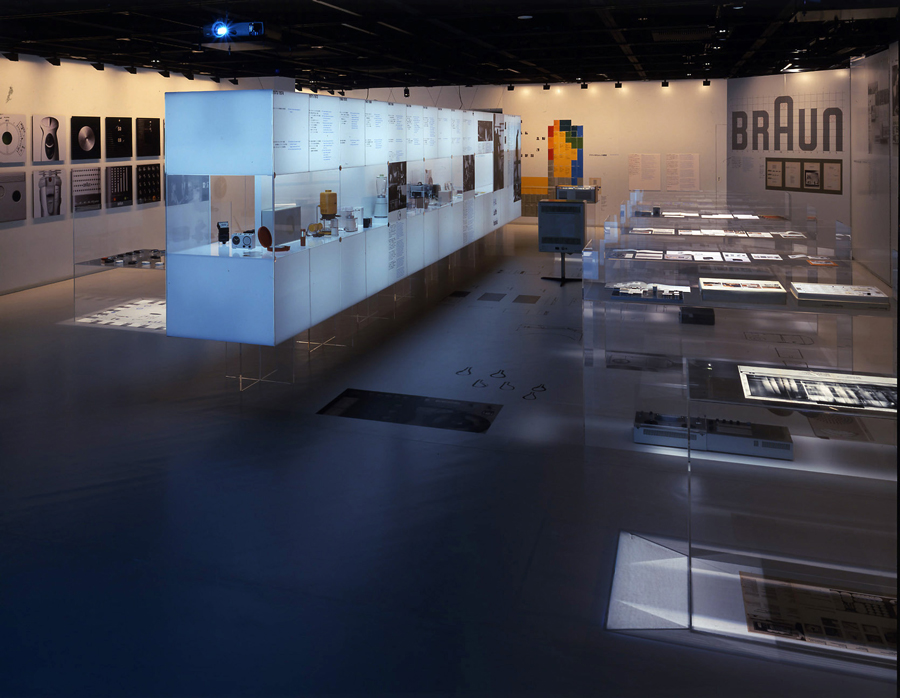
AXIS Gallery hosts innovative exhibitions reflecting contemporary themes, including solo shows, corporate exhibitions, and themed displays. From left: “Nannano? A-POC -Miyake Issey + Fujiwara Dai-” Exhibition, “Braun Exhibition-Not just a matter of form“
Ishibashi Precisely. Unlike magazines, exhibitions are crucial for “experiencing design firsthand”. Japan may be described as having endured “lost decades”, yet design has persisted through twists and turns, being passed down while young people create fresh designs.
ー When it comes to AXIS, the AXIS magazine itself is also indispensable. I was an editorial staff member myself, and at that time you attended editorial meetings, was responsible for a serialised column, and also served as an interviewer for the series “Corporate Culture and Creativity”, interviewing presidents of major corporations.
Ishibashi The president interviews were an excellent learning experience. Whilst none of them were directly involved in design, they all answered our questions with great sincerity. Some presidents even prepared notes and referred to them while speaking.
ー In your column for AXIS magazine issue 5 (published October 1982), you wrote about ‘The Value of Things’. Rereading it now, I realised the essence of that message from over 40 years ago remains entirely unchanged.
Ishibashi I believe AXIS magazine served as an effective means of enlightenment, particularly in conveying how design is a vital management resource within business. Focusing on the relationship between companies and design as a key theme was a positive approach.
ー Now, moving on, around 1996, the fifteenth year since founding, marked a transformative period for AXIS. It transitioned from being a movement focused on promoting design to achieving a second founding as a design company handling everything from consulting to design development in-house. What was the background to this?
Ishibashi For about 15 years after founding, design awareness activities were the main focus. However, the 1990s brought changing times, and simultaneously, AXIS's achievements and brand were gaining recognition. Therefore, in 1996, we merged with Market Design Institute (MDI), which specialised in marketing, to strengthen our consulting business. Then, in 1998, we merged with Iigura Institute Inc, which originated from Bridgestone design centre, expanding our business from marketing and consulting to encompass design development. The vision of a design company I had when I returned from America was realised, centred around AXIS.
ー And so, having reached its 45th anniversary since founding, AXIS continues to strive as a cornerstone of the design world.
Ishibashi It really has been over 40 years now. I often think, how on earth did we get this far? Particularly with AXIS magazine, the media landscape changed dramatically with the spread of digital. Recently, we reverted from a bimonthly to a quarterly publication, but we're also focusing on our online presence and introducing a membership system. We're working hard, mastering both print media and the internet.
Pioneering new horizons in design within the world of art
ー Now, you are currently President of the Ishibashi Foundation, the organisation that operates the Artizon Museum, and you spearheaded the major transformation from the Bridgestone Museum of Art to the Artizon Museum. Could you tell us about the background to this?
Ishibashi As with Bridgestone and AXIS, the primary factor was sensing the changing times. I felt the museum itself needed to update and adapt to the era. The Bridgestone Museum enjoyed high recognition and was renowned for its collections of Impressionist and modern Japanese Western-style paintings. However, we couldn't afford to rest on our laurels. It was vital to take proactive steps, transforming the museum into one that particularly captured the interest of younger generations. It was at this juncture that the decision was made to rebuild the Bridgestone headquarters building in Kyōbashi, which housed the museum. While relocating the museum elsewhere was considered, we adhered to the founding spirit of Shojiro Ishibashi, who, inspired by the Museum of Modern Art (MoMA) in New York, envisioned an urban museum accessible to all, anytime.
ー It took approximately four years from preparation to opening, didn't it?
Ishibashi We demolished the old building in 2015, the new structure was completed in 2019, and the museum reopened in January 2020. Nikken Sekkei led the building design. For the crucial museum content, we brought in Takashi Tabata from AXIS, who possesses deep design expertise. We solidified the concept through research into museums both domestically and internationally, alongside interviews with experts. Later, AXIS's creative team also joined the discussions. After extensive deliberation, the new museum's concept was defined as “Experiencing Creativity”, and its name changed from the Bridgestone Museum of Art to the Artizon Museum. Artizon is a coined term combining “ART” and “HORIZON”. It embodies our aspiration for the museum to be a place where visitors can explore and experience the new possibilities of art that this word represents.
ー Only Mr Ishibashi, as President of the Ishibashi Foundation, could have authorised the name change. This approach aligns with what he implemented at Bridgestone and AXIS.
Ishibashi Indeed. Through my experience with Bridgestone's CI and AXIS, I understood that external change can only follow internal transformation. I applied that methodology here too.
ー Specifically?
Ishibashi For a company like Bridgestone, changing employee awareness is paramount, and collaboration with the HR department is essential. However, for a museum, the collection determines its image. The Bridgestone Museum of Art was recognised for its Impressionist and modern Japanese Western-style paintings, but to appeal to younger audiences going forward, we felt it necessary to also collect works representing new trends, such as contemporary art. Yet, just as with Bridgestone's CI change, there was criticism regarding broadening the collection's scope. However, standing still only means being left behind. We have no choice but to advance with the times.
ー Your vision is also evident in the exhibition's curation.
Ishibashi In 2020, the opening exhibition at Artizon Museum was titled “Emerging Artscape: The State of Our Collection”, featuring a selection of our finest holdings. However, the COVID-19 pandemic soon struck, leading to prolonged periods of self-restraint. Finally, in 2023, post-pandemic, we held the exhibition “ABSTRACTION: The Genesis and Evolution of Abstract Painting Cézanne, Fauvism, Cubism and on to Today”. This was a project that embodied our core concept of “Experiencing Creativity”. Centred on our collection, it displayed over 250 works spanning from the post-Impressionist Cézanne through Fauvism and Cubism to contemporary art. It provided a comprehensive overview of 20th-century art and became a major talking point. By leveraging new tools such as social media, we were able to attract new visitors. It truly presented an excellent opportunity to witness the transformation from the Bridgestone Museum of Art to the Artizon Museum.
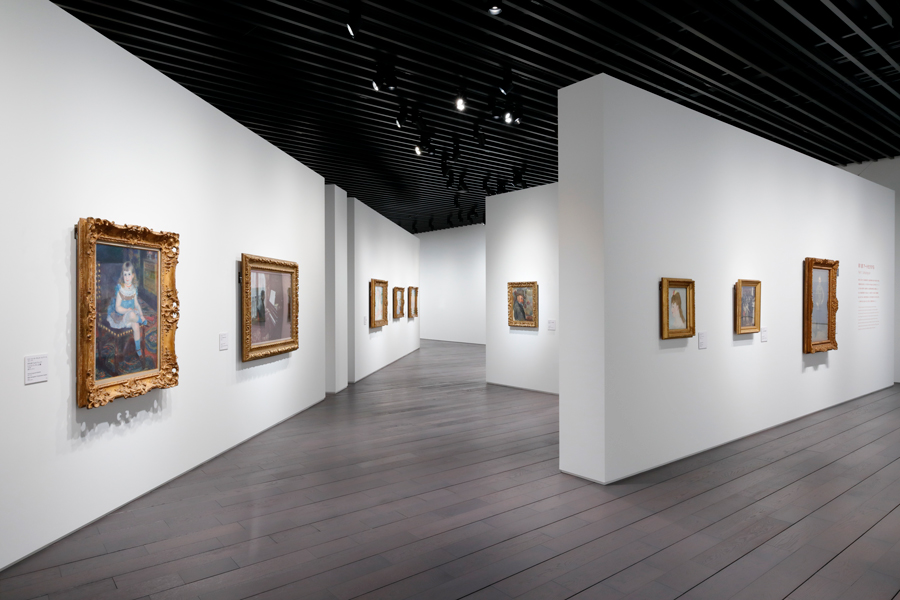
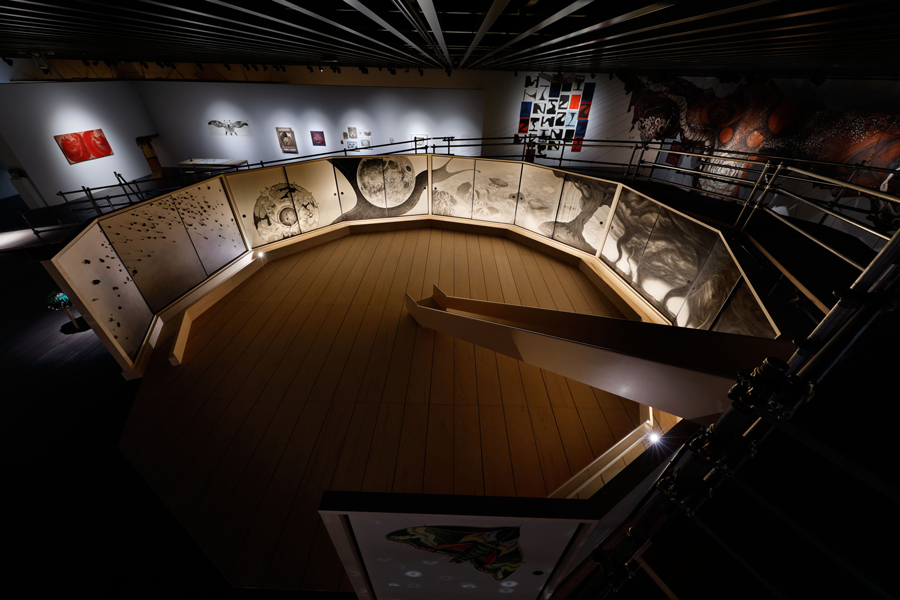
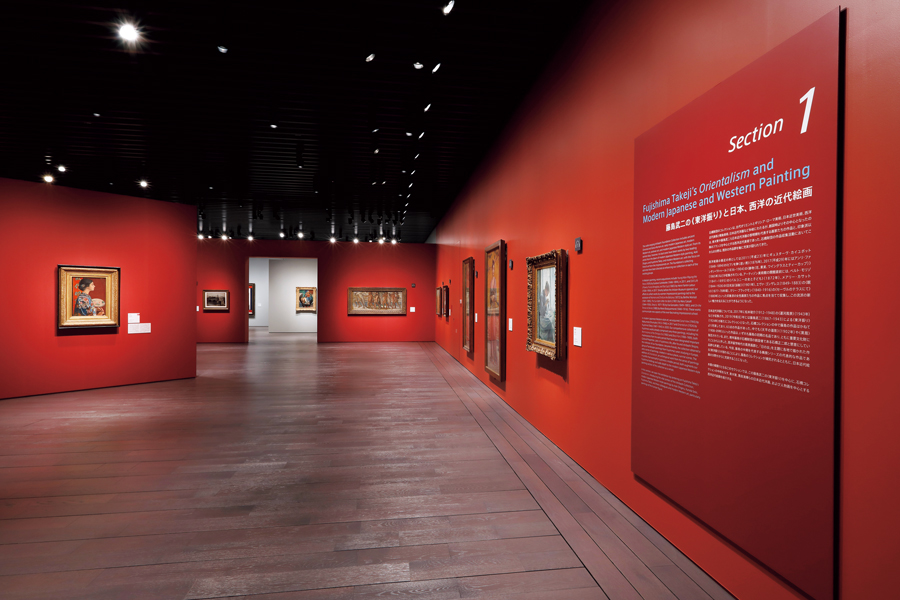
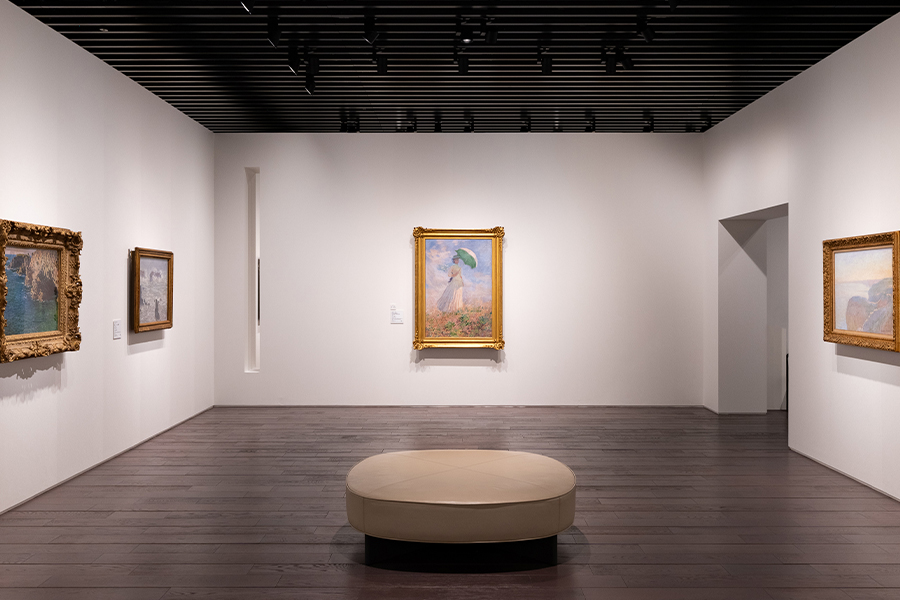
Artizon Museum engages with diverse themes beyond traditional art exhibitions, including the “Jam Session” series featuring collaborations between its collection and contemporary artists, as well as design-focused special exhibitions. (Photos, in order: Opening Commemorative Exhibition, Jam Session: Tomoko Konoike Exhibition, “ABSTRACTION” Exhibition, Claude Monet Exhibition)
ー How did you approach the building as a vessel and the spatial design?
Ishibashi The location is exceptionally favourable, situated where Ginza street and Yaesu street intersect. We first compiled criteria for the space and then translated these into the design. The primary focus was the entrance. As the old museum's entrance was difficult to locate, the new museum's entrance faces Ginza street at the building's front. We levelled the ground to enhance accessibility and used transparent glass to make it more inviting. Visitors enter this open, bright entrance and are guided to the exhibition rooms via the escalator directly ahead. Beyond the entrance lies a welcoming café where all may enjoy delicious tea and cuisine. The café's large windows open fully, sharing the adjacent Toda Building and public space to form the integrated cultural area known as “Kyobashi Saiku”. We were conscious of the flow of people and urban beauty stretching from Tokyo Station through Nihombashi and Kyobashi to Ginza, aiming for the Artison Museum to become a focal point within the city of Tokyo.
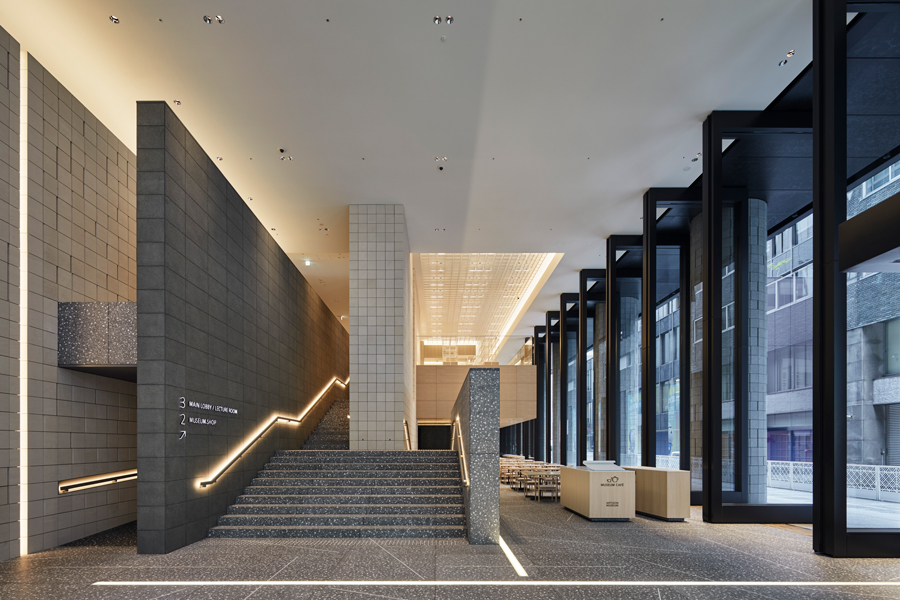
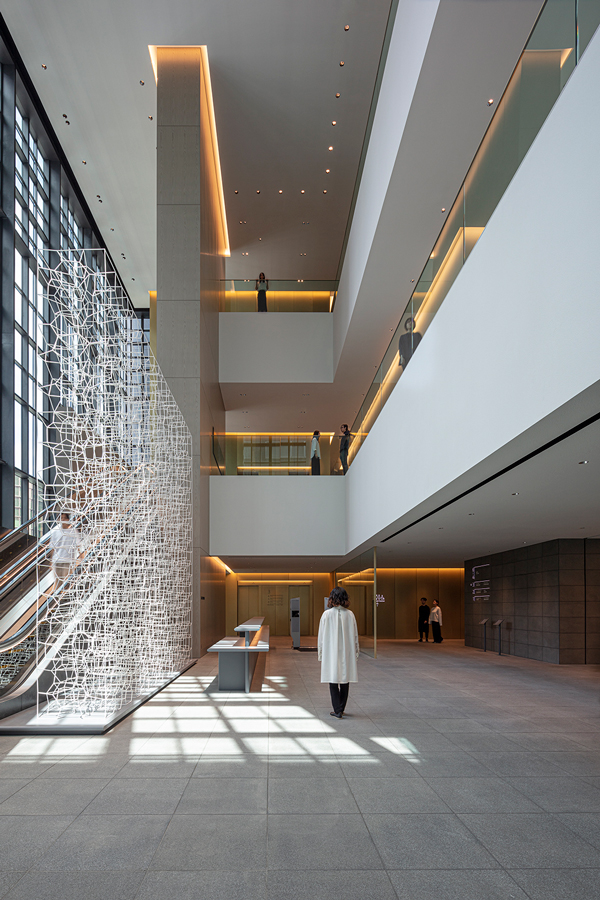
From left: Opening the large window (right side) reveals the first-floor entrance forming the “Kyobashi Saiku” complex cultural area, and the bright, open third-floor lobby guiding visitors to the exhibits.
ー Could you elaborate on the specific criteria for the spatial design?
Ishibashi The spatial design for the museum was commissioned to TONERICO:INC. a young design unit, following a competition. When they first asked if we had any requests, I explained that the Artizon Museum's entrance hall had once been Bridgestone's lobby and showroom. That space was designed by Shiro Kuramata, and the show windows at the time featured striking black walls with diagonal grout lines. Taking these as motifs, they clad the first-floor entrance walls in black granite and laid the floor with terrazzo tiles featuring inlaid white marble lines. The terrazzo was crafted by the artisans who had worked on Kuramata's “Star Piece”.
ー The sixth-floor exhibition room lobby features one of Kuramata's rare chairs. While many museums collect his works, this is likely the only place where visitors can actually sit on one.
Ishibashi Indeed, only our museum allows visitors to actually sit on pieces like Kuramata's “How High the Moon” and the “Crescent-shaped Glass Bench” – truly an “Experiencing Creativity ”. We also carefully preserve the sofa he designed for Bridgestone's lobby and showroom, which we have now refined for use as museum furniture.
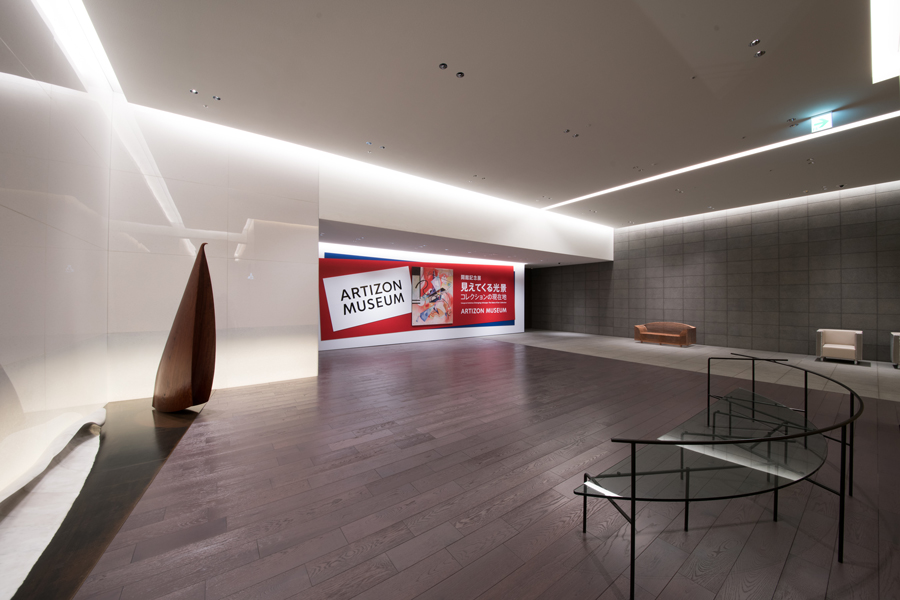

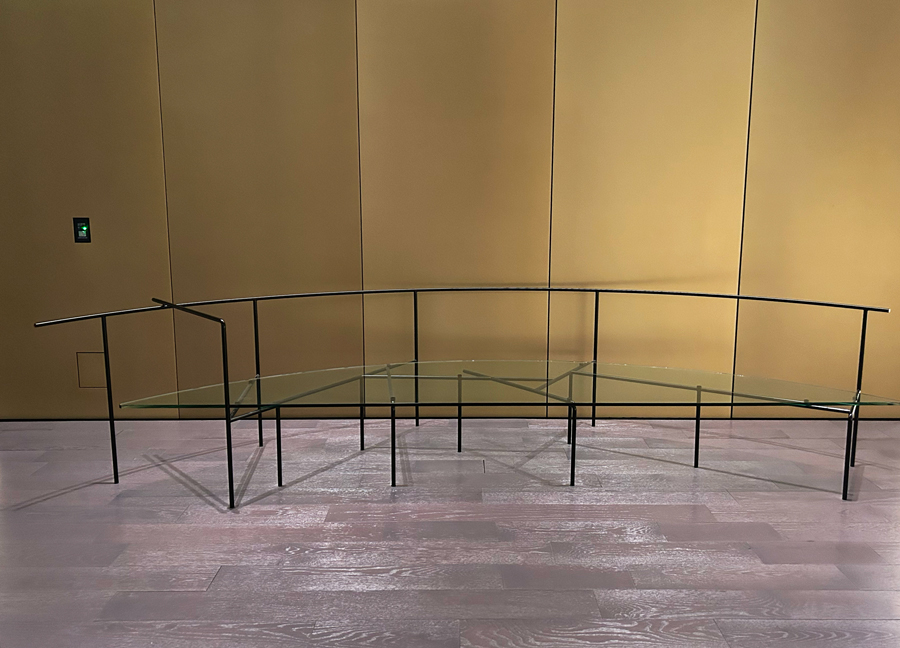
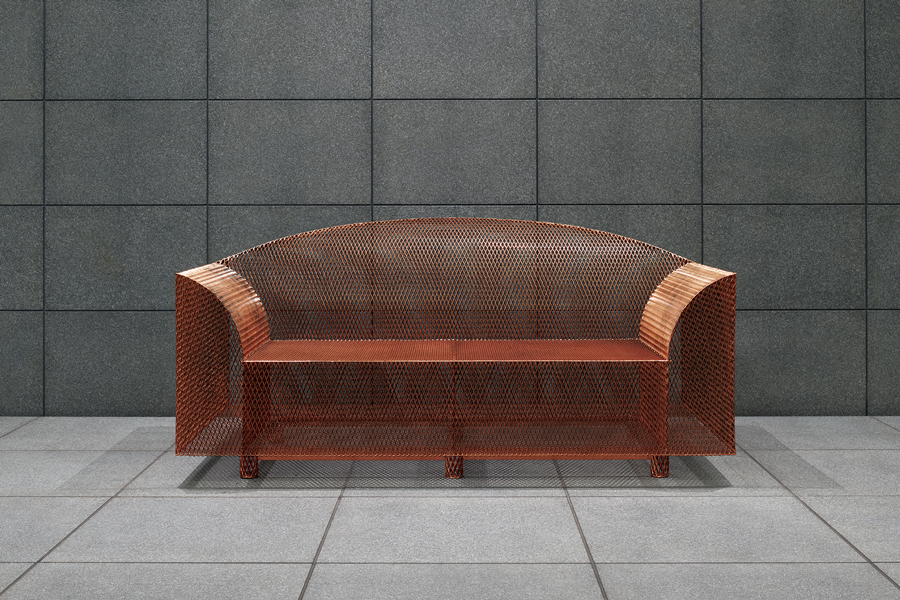
The sixth-floor lobby and Kurumata's works in their new setting: “Sofa”, “Crescent- shaped Glass Bench,” and “How High the Moon”.
Ishibashi In the lobby lift hall of Ishibashi Bridgestone, there was a work by Shintaro Tanaka, a contemporary artist and friend of Kuramata. This work is now displayed alongside Kuramata's pieces in the sixth-floor lobby of the Artizon Museum. When relocating it to the museum, Tanaka proposed installing LEDs behind the white marble wall surface, altering the display so the entire work appears to float. He passed away shortly before its completion. It was deeply regrettable.
ー The sixth-floor exhibition lobby, featuring works by Tanaka and Kuramata, truly symbolises Artizon Museum as a space where art and design converge.
Ishibashi Kuramata also created wonderful designs for Bridgestone's showrooms, which were not normally accessible to the public. I always felt it was a shame they weren't seen more widely, so when rebuilding the museum, I incorporated many elements of his design. For those who appreciate design, I think discovering these Kuramata homages will be a pleasure.
ー Many other designers have also been involved. The signage plan is by Masaaki Hiromura, featuring a design using “Slit Light” with ultra-thin LEDs. The lighting for the fourth-floor display case rooms is by Shozo Toyohisa, who has extensive experience in museum lighting design. What is the reason you are so particular about the museum's design?
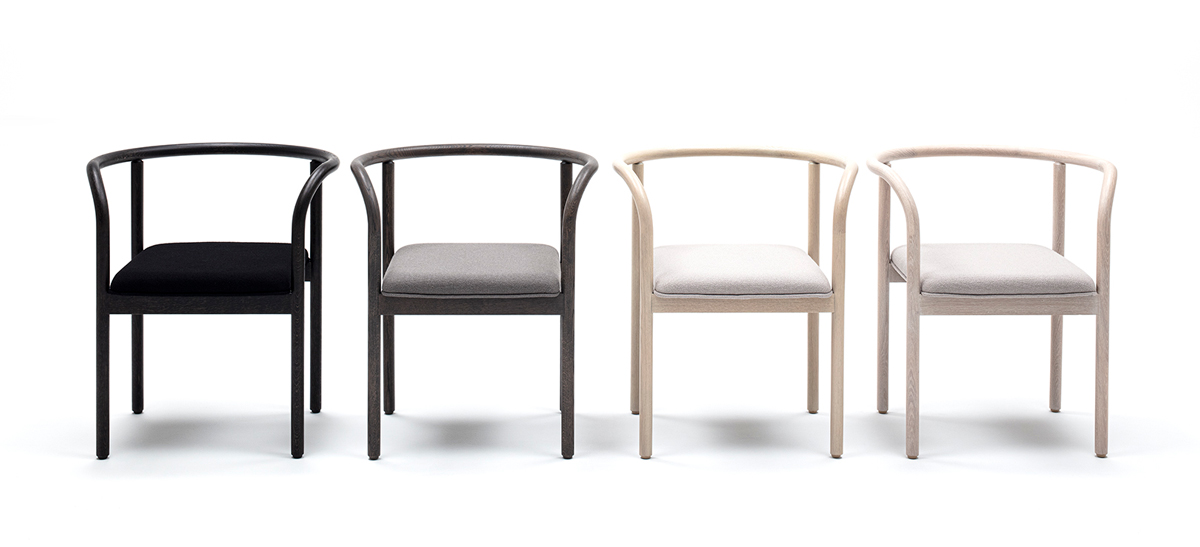

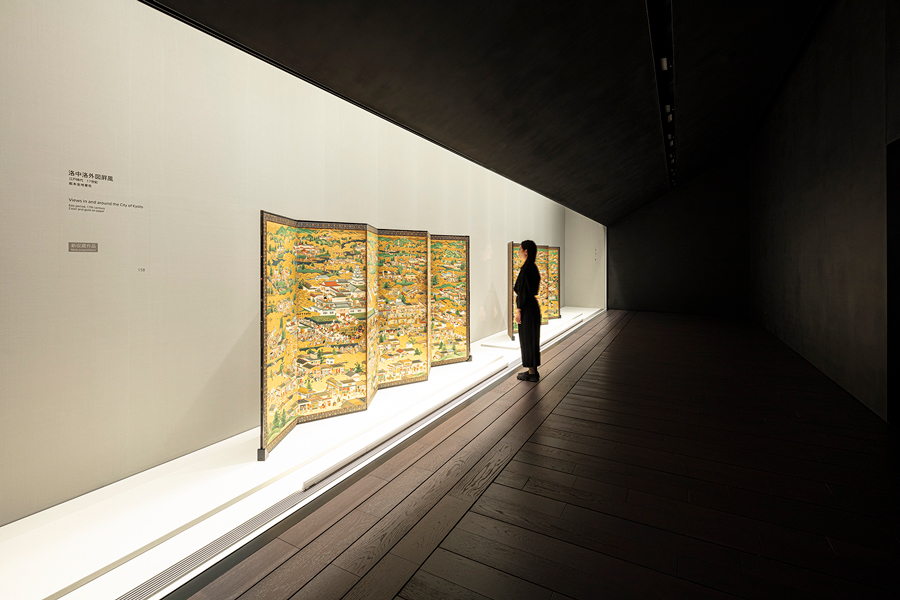
Photos, in order: Museum furniture by TONERICO, signage by Masaaki Hiromura, lighting for the fourth-floor display cases by Shozo Toyohisa.
Ishibashi Achieving comfort, really. Visiting various museums, one finds surprisingly few where the space feels genuinely comfortable and welcoming. Since we could start from scratch, we resolved to do what needed doing without being constrained by the past.
To achieve this, we also focused on the unseen aspects of safety and comfort. For instance, the exhibition rooms employ a displacement ventilation system circulating air through 5-millimetre slits in the flooring. For lighting, we co-developed with Yamagiwa a single type of LED spotlight that optimally illuminates all works and is wirelessly controllable. The ceiling uses a grid system that doesn't restrict exhibition flexibility. Furthermore, the building incorporates seismic isolation and thorough flood prevention measures.
ー One senses the high precision of this museum. Its commitment to design is evident in printed materials such as catalogues, museum merchandise, and even the café.
Ishibashi As our concept is “a museum enjoyed alongside its spaces”, we are dedicated to ensuring quality that satisfies our visitors—from the artworks and the spaces themselves, right through to the merchandise and café menu. It wasn't consciously planned, but I suppose it has naturally become what one might call an experiential museum.
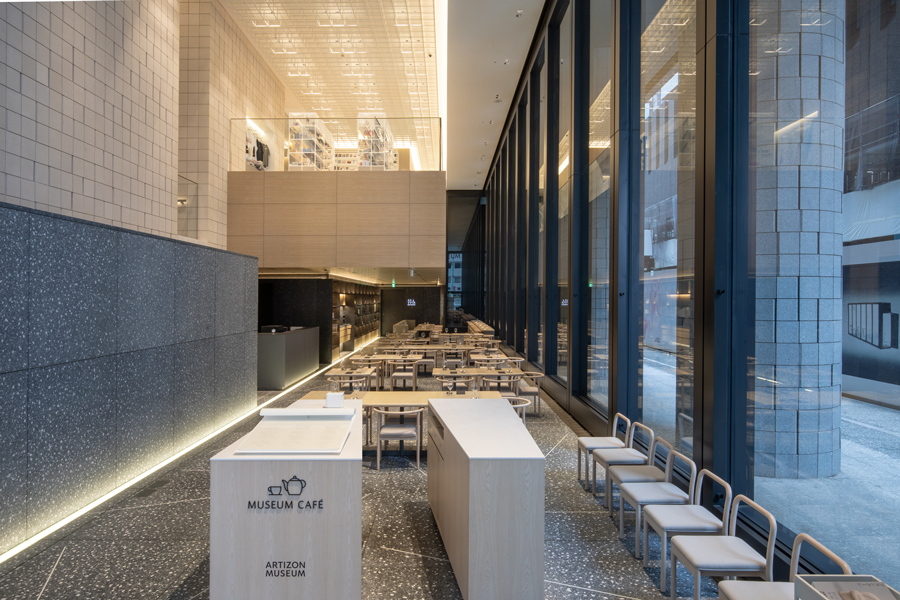
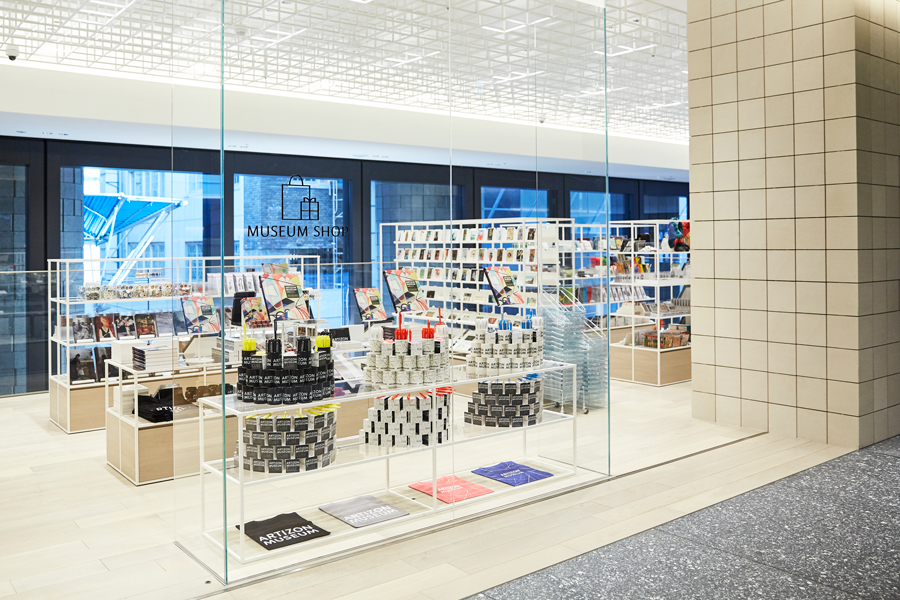

As part of the museum's branding, consistent design direction is implemented across the museum space, printed materials like catalogues, museum goods, and even café interiors and accessories. (In order: Café, museum shop, original goods tied to the exhibition)
ー Regarding the precision of the museum, the development of the Ishibashi Foundation Art Research Centre, which serves as the museum's backstage facility, is also splendid.
Ishibashi We needed to safely store the existing collection and also required storage facilities for new acquisitions. We developed it from a risk diversification perspective, preparing for frequent disasters. Simultaneously, we incorporated functions such as research, conservation, a library, and lecture spaces, thus forming the “Art Research Centre”. We have implemented an address system for all stored works, building a system manageable with an iPad.
Furthermore, as the frequency of works moving between the museum and the art centre increases, we developed transport crates. These crates are not disposable; they can be partitioned internally according to the work's size and maintain an airtight seal, thereby reducing stress on the artwork. We have also launched our own carbon-neutral project, installing solar panels across the entire roof. Together with the museum, we have now achieved 100% renewable energy usage. In this way, we are undertaking various challenges in areas that may not be immediately visible but require steady, persistent effort.
ー Come to think of it, there was an award called the Deming Prize for total quality management from the 70s to the 80s, and I felt that your perspective as a corporate executive was also being applied to the museum.
Ishibashi Indeed, it might be more accurate to describe it as a business model shift “from museum operation to museum management.” Even in the arts field like museums, the key isn't necessarily becoming business-oriented, but rather the mindset of how to effectively utilize existing capital and resources. For example, it has long been said that “companies should be social entities.” Museums, however, have already integrated into society and bear the responsibility to fulfill that role. In essence, ensuring their sustainability by making “contributing to the public good” the cornerstone of their operations is fundamental to the museum enterprise. To achieve this, a mindset for managing various challenges is essential—and that is precisely what management entails.
The Potential of Design Museums
ー I understand Artizon Museum has recently acquired works by Ettore Sottsass and Shiro Kuramata for its collection. Does this signal an expansion into design in future?
Ishibashi Our museum is broadening its collection from Impressionism to contemporary art, and design lies along that continuum. Moreover, I sense an increasing number of people no longer distinguish between art and design. Given my familiarity with the design world, I believe it would be challenging for our museum to extend into industrial design, and crafts and craftsmanship are different matters altogether. Amidst this, as we refined the design we should handle, we came to see the works of Sottsass and Kuramata as prime examples straddling the realms of art and design. We spent nearly three years researching Sottsass works, and coincidentally began our collection centred on vintage pieces from the “Memphis” exhibition held at the AXIS building in 1981. Regarding Kuramata, through our long-standing friendship with Mieko Kuramata, works, drawings, photographs, sketches, and books held by the Kuramata Design Office have been added to the collection. As both were involved in “Memphis” and were friends, we are reaffirming this connection.
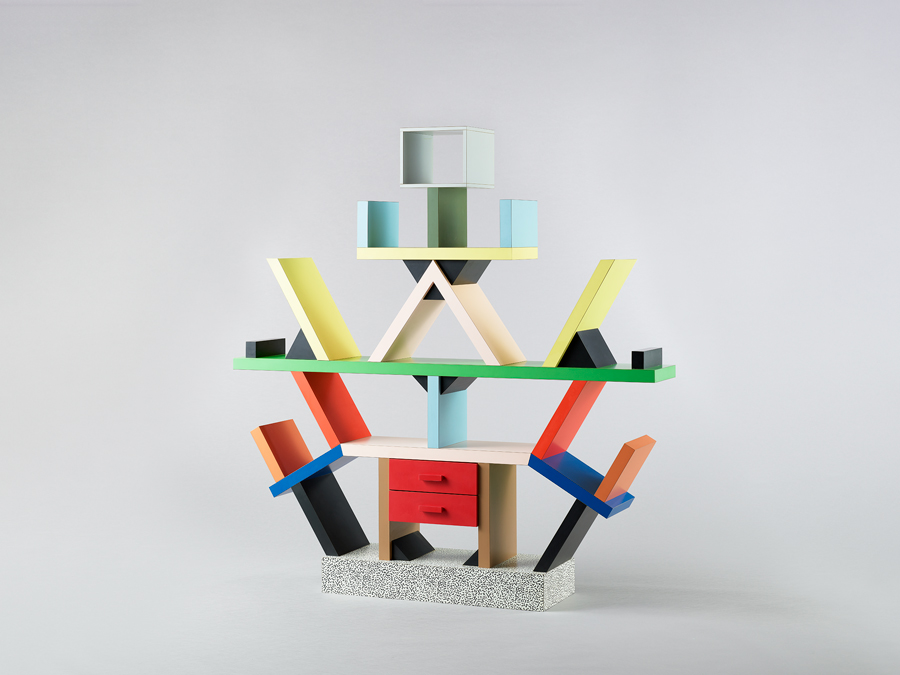
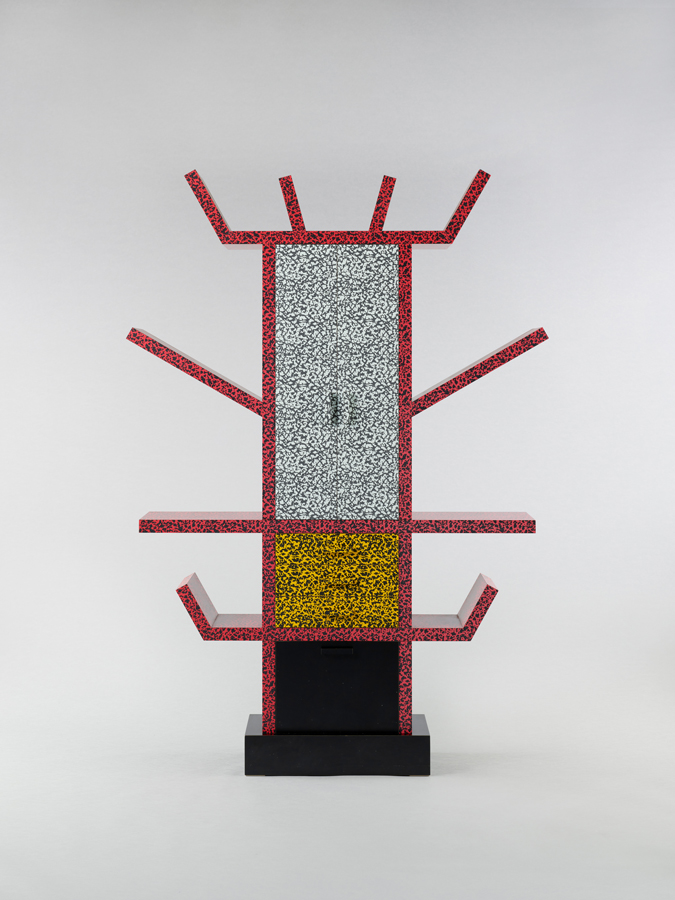
Sottsass's iconic Memphis pieces “Carlton” (left) and “Casablanca” (right).
ー There are various developments concerning design museums and design archives in Japan. What are your thoughts on this?
Ishibashi I have heard such discussions. However, establishing a design museum and its governing body requires more than half-hearted commitment. I consider it a profoundly weighty undertaking.
ー From your position already managing an art museum, what are your thoughts on design museums?
Ishibashi I believe the Design Museum should be primarily a national undertaking. This is because, from the post-war period to the present day, numerous companies have manufactured outstanding products, and as a result, Japan has enhanced its national strength. The benefits of this have spread to marketing and advertising, invigorating graphic and packaging design, film, and interior design, providing many designers with opportunities to flourish. Design has truly underpinned the nation's prosperity, so it is the state's responsibility to preserve, document, and promote it.
However, it is difficult to imagine the state taking action. I once spoke with Issey Miyake, and even someone of his stature found it challenging to influence the government. What should be done? The first step might be for designers and creators themselves to form an operational body. Alternatively, design organisations could unite to initiate such a movement. Until around the 1990s, I imagined organisations like the Japan Industrial Design Promotion Organization (now the Japan Institute of Design Promotion), formerly an external body of the Ministry of International Trade and Industry, might fulfil such a role.
ー It is frustrating that progress remains slow domestically, despite excellent overseas examples to draw upon, such as London's Design Museum, New York's MoMA, and Hong Kong's M+. Speaking of art museums, Shojiro Ishibashi, founder of the Ishibashi Foundation, donated the buildings for the National Museum of Modern Art, Tokyo at Takebashi and the Japanese Pavilion at the Venice Biennale. He practised patronage of the arts and culture.
Ishibashi Shojiro Ishibashi, believing that his personal collection should not remain hidden away but rather serve “For the welfare and happiness of all mankind,” was quick to open the Bridgestone Museum of Art as a private museum in 1952, post-war. Furthermore, my father, Kanichiro, also collected art spanning the pre-war to post-war periods, which is now held by the Ishibashi Foundation. The Artizon Museum today is precisely this “Version 1.0,” inheriting and developing these assets. Moving forward, we aim to evolve towards “Version 2.0,” while pursuing our own approach to become a museum that encompasses the field of design.
ー It has been most rewarding to hear your insights today, Mr Ishibashi. We look forward to the future of the Ishibashi Foundation, Artizon Museum and AXIS. Thank you very much.

Home Archive Communication Education Exchange Proposal Research Company Membership Contact
Copyright © PLAT. All rights reserved