
Japanese Design Archive Survey
DESIGN ARCHIVE
Designers & Creators
Issey Miyake
Designer
Interview01: December 22, 2025, 5:30–6:30 p.m.
Location: Miyake Design Studio
Interviewees: Midori Kitamura, Masako Omori
Interviewer: Yasuko Seki
Writing: Yasuko Seki
PROFILE
Profile
Issey Miyake
Designer
1938 Born in Hiroshima Prefecture
1964 Graduated from the Department of Graphic Design at Tama Art University
1965 Moved to Paris
1970 Returned to Japan and established the Miyake Design Studio
1971 Presented the first ISSEY MIYAKE overseas collection in New York
1973 Presented the first collection in Paris
1977 Received the 1976 Mainichi Design Award
1983 “ISSEY MIYAKE SPECTACLE: BODYWORKS” exhibition
1988 Began work on Pleats
“ISSEY MIYAKE A UN” exhibition (France)
1990 Received the 1st Hiroshima Art Prize
1991 Decorated as a Commandeur des Arts et Lettres (France)
1993 Launched the “PLEATS PLEASE ISSEY MIYAKE” brand
1997 Awarded the Medal with Purple Ribbon (Japan)
1998 Appointed a Person of Cultural Merit (Japan)
Launced the “A-POC” Project
“ISSEY MIYAKE MAKING THINGS” exhibition (France)
2000 ISSEY MIYAKE MAKING THINGS” exhibition (Japan)
2004 Established THE MIYAKE ISSEY FOUNDATION
2006 Received the 22nd Kyoto Prize in the Philosophy and Arts category
2007 Opened 21_21 DESIGN SIGHT; appointed Director
Launced the Reality Lab Project.
2010 Awarded the Order of Culture (Japan)
Launch of the “132 5. ISSEY MIYAKE” brand
2011 THE MIYAKE ISSEY FOUNDATION transferd as one of its directors Transitioned to a public interest incorporated foundation
2012 Founded of the “Association for the Establishment of the National Museum of Design” (co-founded with Masanori Aoyagi)
2016 Decorated as a Commandeur de l’Ordre National de la Legion d’Honneur (France)
“MIYAKE ISSEY EXHIBITION: The Work of Miyake Issey” (Japan)
2022 Passed away
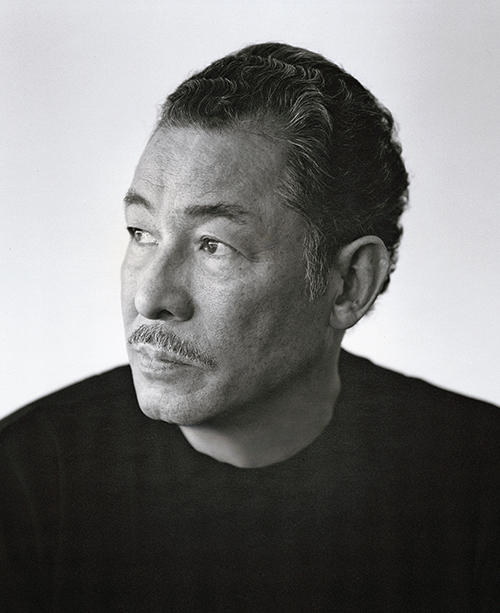
Photo: Brigitte Lacombe
Description
Description
Issey Miyake is a creator who has remained a driving force behind the evolution of design.
The core of his work stems from ‘A Piece of Cloth’ and is evident in the innovation seen in ‘BODY’, ‘PLEATS PLEASE ISSEY MIYAKE’, ‘A-POC’, ‘132 5. ISSEY MIYAKE’, and lies in his incorporation of modern design concepts—such as rationality and technological innovation—into clothing design, a field that had previously been dominated by narrative-driven approaches. Above all, his work centred on exploring ‘the relationship between people and clothing’ and ‘the meaning of people wearing clothes’. Numerous works on the cloth designer Issey Miyake have been published, including the definitive work “Issey Miyake” (published by TASCHEN), as well as many collections of his work, photo books and critical studies; there are also magazine articles and television programmes.
I believe Issey Miyake had another side to him. That side was that of a design activist—one dedicated to contributing to the creation and development of design culture, grounded in an overwhelming faith in “the fundamental creativity and passion inherent in human beings,” which encompasses architecture, product design, graphic design, crafts, dance, and art. It all began around the time of the World Design Conference held in Tokyo in 1960, when Miyake—then a student at an art university—reacted to the fact that fashion design was not included in the discussions and declared the formation of the “Design Students’ Union (tentative name).” In that declaration, he wrote, “It goes without saying how deeply clothing is intertwined with daily life,” revealing his extraordinary passion for clothing design. At the same time, it is undeniable that he felt a sense of dissonance regarding the fact that, despite “clothing, food, and shelter” forming the foundation of daily life, fashion design had not been included as a theme at this global conference. However, I believe this event became the starting point for Miyake’s subsequent activities.
Around the year 2000, Miyake took his first serious steps as a design activist. One such initiative was his campaign to establish a national design museum, sparked by his contribution to the “Let’s Build a Design Museum” column (January 28, 2003, Asahi Shimbun Evening Edition). This campaign emphasized the need to document, preserve, organize, and promote “design”—which has contributed significantly to the development of Japan’s industry, economy, and culture—and had a profound impact on the design world, an influence that continues to this day.
In 2004, he established THE MIYAKE ISSEY FOUNDATION,subsequently, it received cabinet approval to change its official status to a public interest incorporated foundation in 2011, to organize an archive of his own works. At the same time, he founded 21_21 DESIGN SIGHT—which could be described as a “pre-design museum”—and assumed the role of director himself, promoting design through exhibitions and publications. It has now established itself as a design destination in Tokyo, attracting many international visitors.
It has been four years since Issey Miyake passed away. Despite concerns such as, ‘What will become of the Issey Miyake brand once he is gone?’, the brand has continued to thrive. Just as I was wondering whether there might be some secret behind this success, I learnt of the Issey Miyake Archive, a project undertaken by THE MIYAKE ISSEY FAOUDATUIN, and was granted the valuable opportunity to interview Midori Kitamura, who had worked alongside Miyake for 50 years. From her account, I felt I had received an answer to the questions of what creativity is and what an archive is. The initiatives of THE MIYAKE ISSEY FOUNDATION —conceived and established by Miyake himself—offer many insights for design archives and design museums.
Masterpiece
Major Works
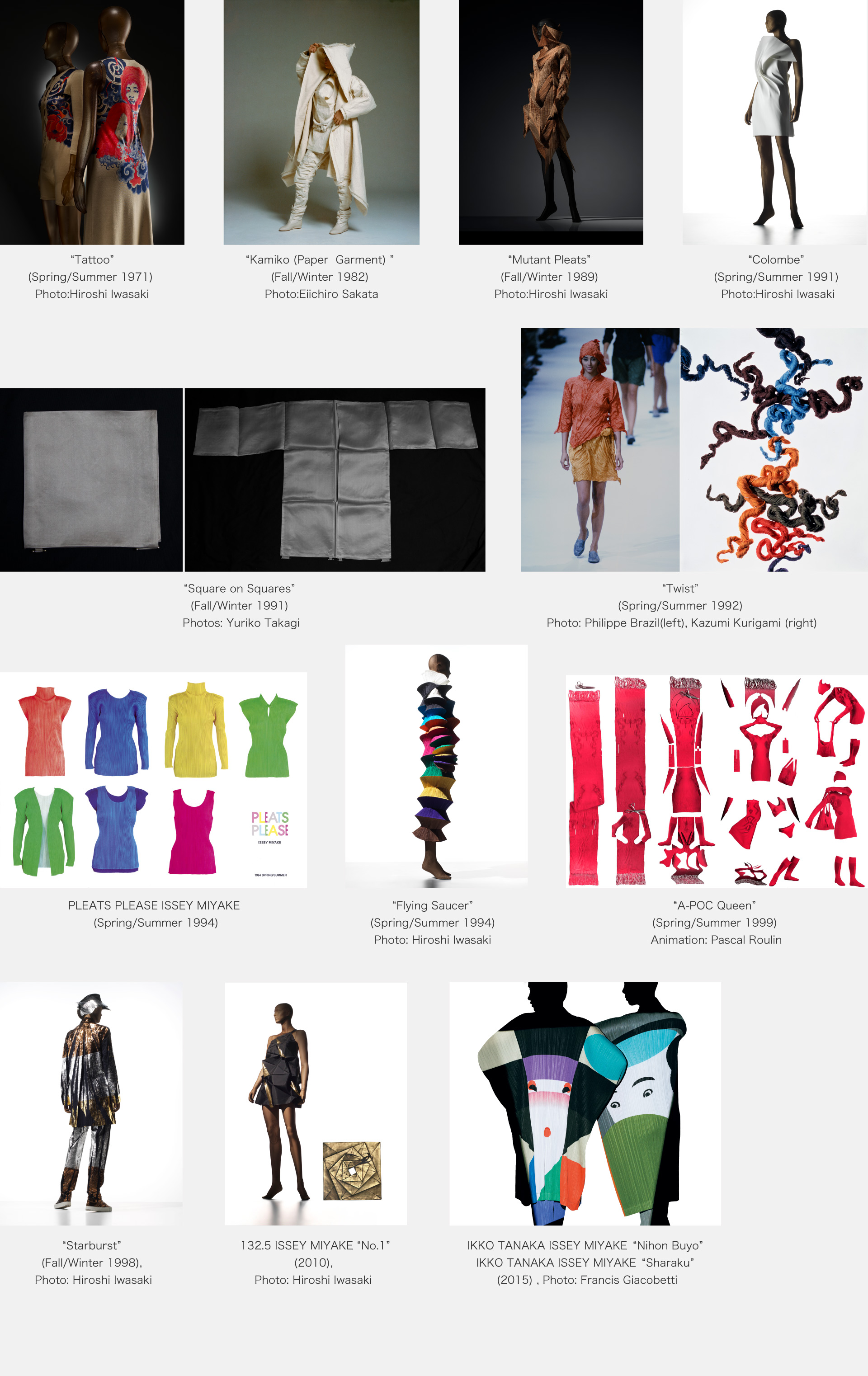
“Tattoo” (Spring/Summer 1971 collection; subsequent collections omitted), “Top Dress” (Spring/Summer 1976), “Paradise” (Fall/Winter 1976; print design : Tadanori Yokoo), “A Piece of Cloth Knit” (Spring/Summer 1977), Body Series (1980 Fall/Winter–1985 Fall/Winter; Plastic Body, Rattan Body, Urethane Body, Wire Body, Waterfall Body, Silicone Body), “Kamiko (Paper Garment)” (1982 Fall/Winter), “Tube Dress” (1983 Fall/Winter), “Balloon Coat” (1987 Spring/Summer), “Origami Pleats” (Spring/Summer 1989), “Rhythm Pleats” (Spring/Summer 1990), “Colombe” (Spring/Summer 1991), “Square on Squares” (Fall/Winter 1991), “Twist” (Spring/Summer 1992), “The offical uniform for Lithuanian team, Barcelona Olympic Games” (1992), “Flying Saucer” (Spring/Summer 1994), “Staircase Pleats” (Fall/Winter 1994), “Starburst” (Fall/Winter 1998), “A-POC King & Queen” (Spring/Summer 1999), IKKO TANAKA ISSEY MIYAKE “Nihon Buyo,” “Sharaku” (2015)
Major Exhibitions
“ISSEY MIYAKE SPECTACLE: BODYWORKS” (1983–1985) Laforet Museum Iigura / Otis Art Institute of Parsons School of Design / San Francisco Museum of Modern Art, Victoria and Albert Museum, “ISSEY MIYAKE A UN” (1988) Musée des Arts Décoratifs, Paris, “Issey Miyake: TEN SEN MEN” (1990) Hiroshima City Museum of Contemporary Art, “Issey Miyake Exhibition: PLEATS PLEASE” (1990), Touko Museum of Contemporary Art,“Isamu Noguchi and Issey Miyake—Arizona” (1997) Marugame Genichiro Inokuma Museum of Contemporary Art, “ISSEY MIYAKE MAKING THINGS” (1998) Fondation Cartier pour l'art contemporain / ACE Gallery, “Issey Miyake Exhibition: ISSEY MIYAKE MAKING THINGS” (2000) Museum of Contemporary Art Tokyo, directed by Issey Miyake, “XXIc.—People of the 21st Century” (2008) 21_21 DESIGN SIGHT, “Issey Miyake Exhibition: The Work of Issey Miyake” (2016) The National Art Center, Tokyo
Major Publications
“ISSEY MIYAKE East Meets West” (1978) Heibonsha; “ISSEY MIYAKE BODYWORKS” (1983) Shogakukan; “ISSEY MIYAKE & MIYAKE DESIGN STUDIO 1970–1985” (1985) Obunsha; “ISSEY MIYAKE PHOTOGRAPHS BY IRVING PENN” (1988) Japanese edition: Libroport / Published in four languages; “Irving Penn regards the work of Issey Miyake” (1999) Japanese edition: Kyuryudo / Published in five languages; “PLEATS PLEASE ISSEY MIYAKE” (2012) TASCHEN; “ISSEY MIYAKE “ (2016, revised and updated edition 2024)
Interview 1
Interview01
"What truly matters is not the physical work,
but the approach and the philosophy of Miyake.
In moments of doubt, revisit his archives."
Encounter with Issey Miyake
Midori Kitamura is currently Chairman of the Miyake Design Studio and President of THE MIYAKE ISSEY FOUNDATION; she is arguably the only person capable of carrying on and embodying Issey Miyake’s vision. I first met her in the late 1980s, when, as an editorial staff at ”AXIS” magazine, I visited her to cover the ‘ISSEY MIYAKE A UN’ exhibition (at the Musée des Arts Décoratifs in Paris), which was causing a sensation as Japan’s exhibition dedicated to fashion design. At that time, she was the face of the ISSEY MIYAKE brand as its attachée de presse, and she has continued to present Issey Miyake to the world through the media and exhibitions. Ms Kitamura spoke to us about ‘The Present and Future of the Issey Miyake Archive’—a subject that only she could address.
ー I heard that you started out as a fitting model, Midori Kitamura. Could you tell us about that time?
Kitamura Mr Miyake (Issey Miyake) returned from overseas and established the Miyake Design Studio (hereinafter MDS) in 1970, marking the start of his work in Japan. By chance, I became a fitting model. That was our first encounter; I was in my early twenties at the time. At the studio, I would try on various clothes and offer my impressions, though I often made rather bold and outspoken comments. However, perhaps Mr Miyake found that refreshing, because he respected and took my feedback and opinions seriously. That’s how it all began. I think he liked the fact that I spoke my mind. That said, I also learned a great deal from the professional models, who could pull off any outfit with such skill.
ー What kind of clothes did you like back then?
Kitamura I’ve loved clothes ever since I was a student, and back then I used to wear Missoni. At the time, there was a shop called “PISA” in the arcade of the Tokyo Prince Hotel that carried Missoni. I’d go in and out of the studio wearing Missoni, with a Hermès scarf tied around my neck and Andrea Fistel shoes on my feet—it was absolutely crazy. (Laughs) But that’s just how much I loved clothes. When I was a student, I’d buy fabrics I liked at a fabric store in Motomachi, Yokohama, and make my own clothes, or give handmade tote bags as gifts for my friends’ birthdays—I really enjoyed doing things like that.
ー What led you to officially join MDS?
Kitamura One day, after I had started coming in and out of MDS frequently, Mr Miyake said to me, “In the West, they have a staff member called an ‘attaché de presse. ’I’d love to have someone like that. Would you like to be one, Midori?” When I casually answered “ Sure”, Mr Tomio Mohri, a design staff member who happened to be there made a joke “An atachée de presse” sounds like “Atasha puresu”ー meaning “I’m just an iron-pressing staff member”.(Laughs) Perhaps the reason he asked someone like me, with neither knowledge nor experience—was that he found my frankness and innocent charm amusing. I accepted without thinking about the consequences, but now that nearly 50 years have passed since then, I realize how truly mysterious encounters can be.
ー Did becoming an attaché de presse change your mindset?
Kitamura Working closely with him and witnessing his work firsthand, I came to know the wonderful people around him. I, who used to be so cocky, began to deeply respect and admire him, and I became as quiet and humble as a timid kitten. I also learned the importance of the act of creation—that is, having a sense of respect for the things and works that people create—and that there are worlds where you simply cannot speak based solely on personal likes and dislikes. But even with all that, every day was a learning experience, and my days were fascinating.
ー Was there a specific turning point that led to your transformation?
Kitamura From the very beginning, Mr Miyake had set a goal of opening stores in three cities: Tokyo, Paris, and New York. He even had “Tokyo, Paris, New York” printed on the shopping bags. He had a clear purpose from the very beginning and worked with a desperate determination. Then, in 1976, he opened the flagship store in the From1st Building in Aoyama and held a large-scale opening show in the open space within the same building. At that time, his friends and I appeared as models, and many wonderful people came to watch. That’s when I realized, “Mr Miyake is an exceptional person.”
ー What did you call Mr Miyake when he was alive?
Kitamura Usually, “Issey-san.” But as I went out into the world and gained various experiences, I felt I had to call him “Master”, “Mr Miyake” in public. When he was alive, we spent a great deal of time together—not just working, but also dining and traveling—and in those moments, I called him “Issey-san.” I distinguished between our private and public scenes.
How to Convey the Essence of Issey Miyake
ー I understand that you have directed most of Issey Miyake’s books and exhibitions. What is the consistent message you wish to convey about him and his creative process? For example, the book "Issey Miyake", published by TASCHEN, is a comprehensive overview of his work.
Kitamura I take pride in the role I play in passing on Mr Miyake’s greatness to future generations. I feel a sense of mission to convey what I have learned from him, the lessons he has taught me, and his creative process. Currently, I am working on a book about his perfumes.
In particular, "Issey Miyake", which can be considered his magnum opus, aimed to document the full scope of his creative process and the history of his research and development. We traced the journey of how his ideas were transformed into clothing through various stages of research, development, and testing, and how those creations were presented and received. At the same time, I included the shows, exhibitions, books, and videos that were the fruits of his research and development.
When I presented the project to him while preparing for the first edition, he said, “I don’t like such a heavy book,” but I was determined to make it happen. Behind this was a deep conviction that I had to document every single activity I could think of.
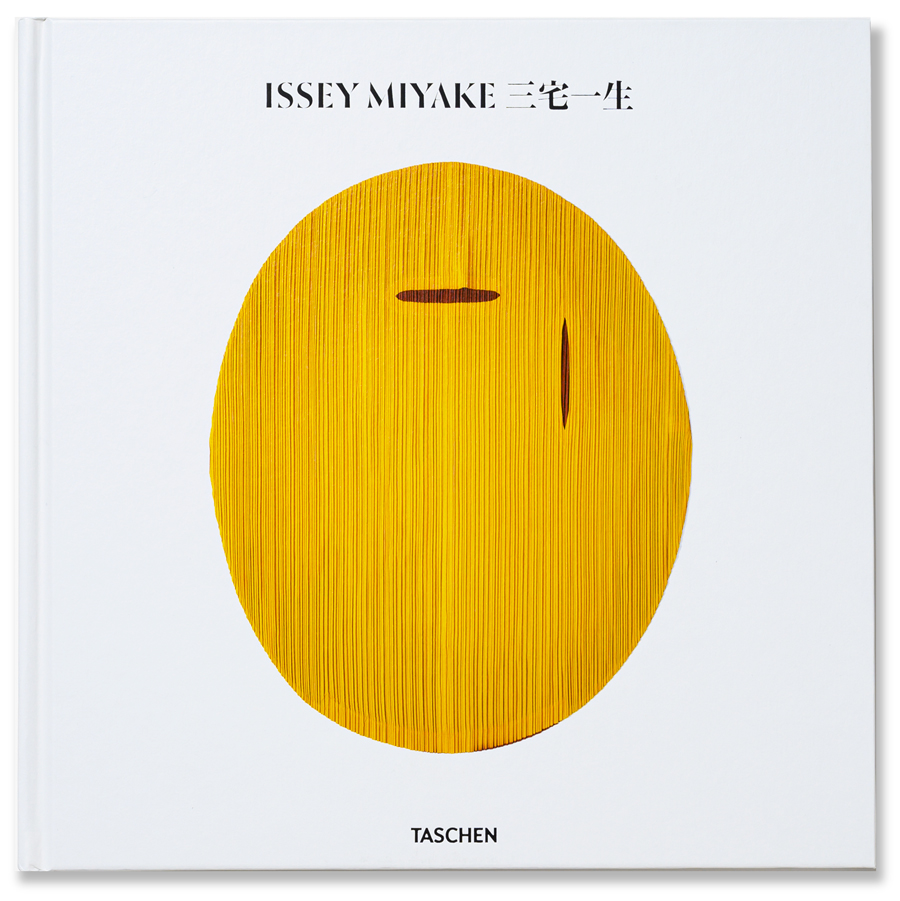
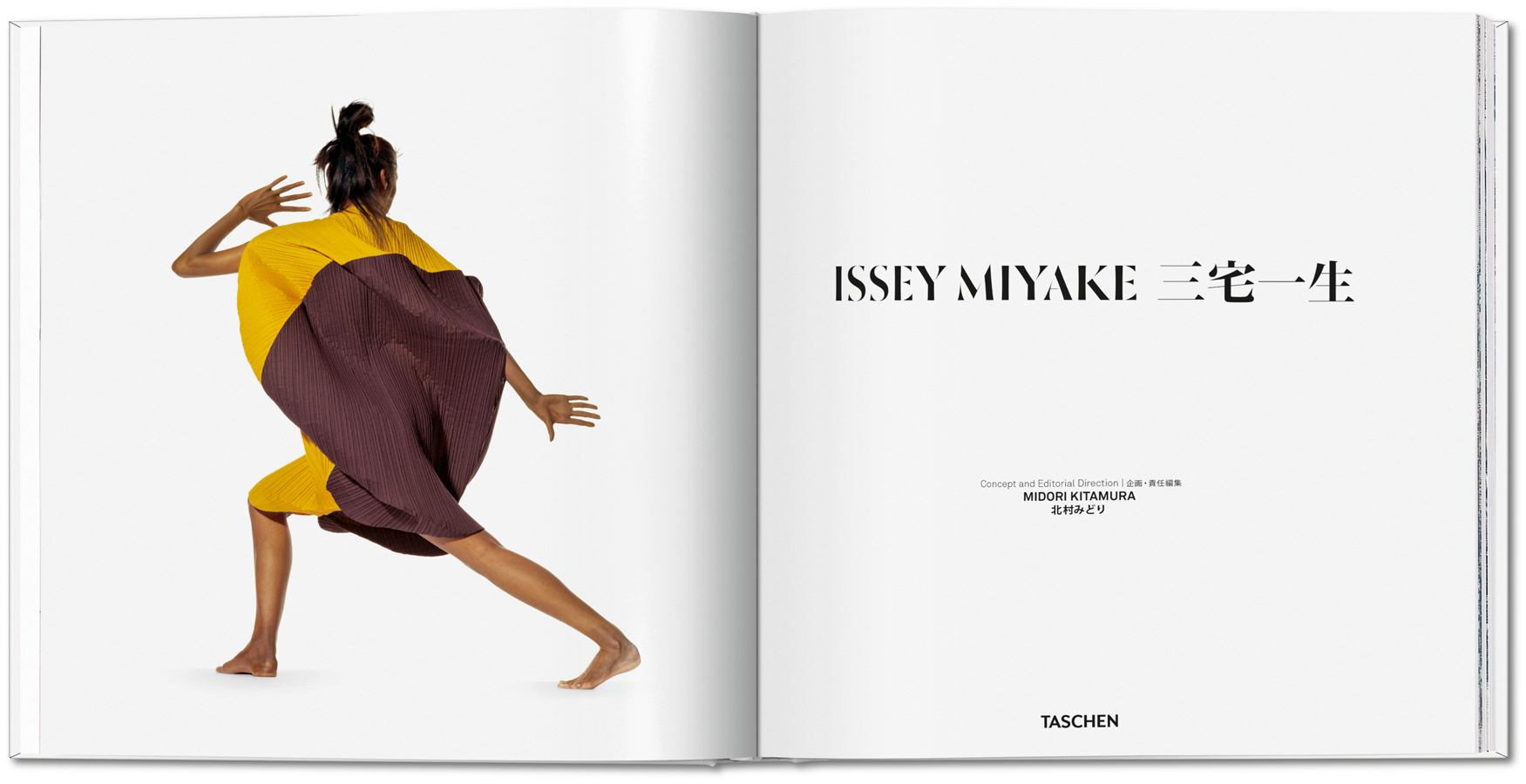
"Issey Miyake" (2024, revised and updated edition). The definitive work documenting every aspect of Miyake’s career that Kitamura could possibly record. Photos:Yasuaki Yoshinaga
ー So that includes important moments that only you know about.
Kitamura That’s right. I was with him almost 24 hours a day. (Laughs) During the final stage of development—the fitting—I made sure to set aside time to be there, no matter how busy I was. At first, he would ask me to come, but even without being asked, I would always sit right next to him and try on the garments myself to check them. It was the same when preparing for the shows. Each and every one of those moments is irreplaceable to me.
ー When working on exhibitions and books, how did the two of you communicate and move forward?
Kitamura Mr Miyake was thinking about it 24 hours a day, 365 days a year. That’s why he could voice vague images and ideas in various situations. I would gather those ideas and, when they built up into a single wave of momentum, shape them into concrete plans. Then, through repeated dialogue—and sometimes arguments—we brought the entire staff on board to pull everything together. However, since he would mutter his thoughts not only to me but to everyone around him, my role was to listen to all of that and synthesize them. That said, I didn’t simply follow his lead; I spoke my mind frankly, and he accepted that.
What is MIYAKE・ISM?
ー I heard that the staff would constantly commit Miyake’s words and ideas to memory and were always thinking about how to bring them to life in a way that matched his vision. I had assumed that he designed with a finished image in mind from the very beginning, so hearing that came as rather a surprise to me.
Kitamura He was simply too busy. He had so much to do that it was impossible for him to oversee everything. That is precisely why he surrounded himself with talented, passionate staff and worked in collaboration with them.
ー So, does that mean Mr Miyake would set the broad direction or present a challenge, and the staff would then bring it to life?
Kitamura Everyone just followed the master in droves. (Laughs) To do that, we kept our ears to the ground and studied hard—not just when we were with him, but in every aspect of our work, to bring his vision to life. In that sense, we were all his students. But simply being taught wasn’t enough; it was also vital to put forward ideas and concepts that would stimulate him. If we couldn’t build that kind of mutual relationship, we simply couldn’t collaborate with the master.
ー How did Mr Miyake himself conceive the ‘essence’ of that overarching direction and momentum?
Kitamura It wasn’t something I could easily explain, and I believe he actually struggled with it. That’s why, once a collection presentation in Paris was over, he would consciously take time to reset his mind—whether by travelling, taking on new challenges, or seeking out new encounters. And yet he never neglected his daily studies; he spared no effort in the research, investigation and development required for his next creative endeavour. His intuition, his intellectual rigour and his obsession with perfection were extraordinary; he was truly always thinking about something.
ー In an industry and era moving at such a breakneck pace, ‘ISSEY MIYAKE’ stands out precisely because they build every new concept from zero, starting from material development. This is why the brand is appreciated in a context entirely separate from 'mode'.
Kitamura Even now, following his passing, our approach of creating from scratch remains unchanged. This is possible because every single member of staff has been trained by witnessing his ideas and working methods first-hand. Furthermore, we are now able to understand things we did not realise whilst he was alive, and are developing them further.
ー Did Mr Miyake himself ever hesitate or feel unsure of his direction?
Kitamura That’s certainly true. In such situations, he also had the courage to listen to and embrace the opinions and ideas of his staff. This was because, for him, the most important thing was to achieve better goals and greater creativity. Our good fortune lies in having had such a wonderful role model close at hand, and in the fact that we still maintain the conditions and environment to move forward and grow whilst sharing those goals. That is why I absolutely refuse to compromise lightly. I have developed a habit of thinking things through to the very end: if something cannot be done, why not, and what must be done to make it happen.
ー Mr Miyake began with ‘A Piece of Cloth’, and through ‘PLEATS PLEASE ISSEY MIYAKE’ (hereinafter PLEATS PLEASE), ‘A-POC’, and ‘132 5. ISSEY MIYAKE’ (hereinafter 132 5.)—and has earned worldwide acclaim for his overwhelming creativity and initiative in revolutionising the concept of clothing design. Yet behind this lay meticulous attention to detail, such as a millimetre-level obsession with design and the in-house development of fabrics. So, the realisation of bold ideas was underpinned by a meticulous accumulation of effort. That, I believe, was the very essence of the brand: MIYAKE-ISM.
Kitamura That’s right. To create truly wonderful clothes, he paid attention to every detail—ensuring that you could put your hand in a pocket without the clothing losing its shape—and was meticulous about the position and size down to the millimetre; his aesthetic was firmly established. And through practice, he nurtured staff who would carry on that creative legacy. I believe he has cultivated excellent staff.
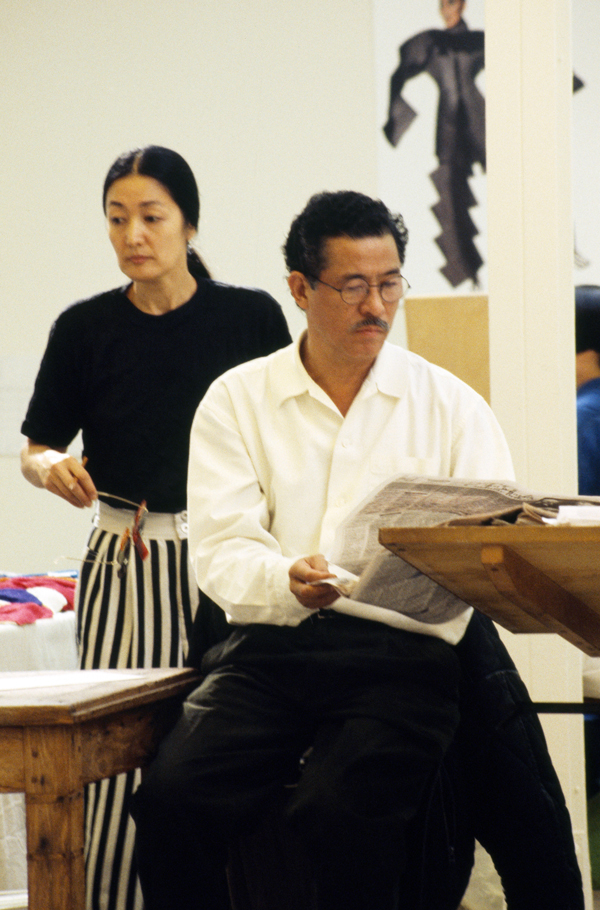
In October 1994, at the Paris office whilst preparing for the Spring/Summer 1995 collection: Issey Miyake (right) and Midori Kitamura.
Photo: TETSUO FUKAYA
Many prominent designers have emerged MDS. For example, Akira Onozuka, Kosuke Tsumura, Naoki Takizawa, Tokujin Yoshioka, Dai Fujiwara and Yusuke Takahashi are earned high acclaim.
In 2007, Mr Miyake established ‘the Reality Lab.’ as an internal research team. This is an experimental laboratory, centred around Mr Miyake, a team of skilled technicians and young staff collaborate to create clothing and products with an eye to the future of Japanese craftsmanship. From this base, ‘123 5.’, which incorporates the principles of origami and sustainable methods, was developed, as was the lighting fixture ‘IN-EI ISSEY MIYAKE’, which applied this concept to a product, both of which attracted considerable attention. Furthermore, innovative brands have emerged, such as ‘HOMME PLISSÉ ISSEY MIYAKE’, a line of everyday wear for modern men that evolves pleating techniques, and the ‘BAO BAO ISSEY MIYAKE’ bag brand.
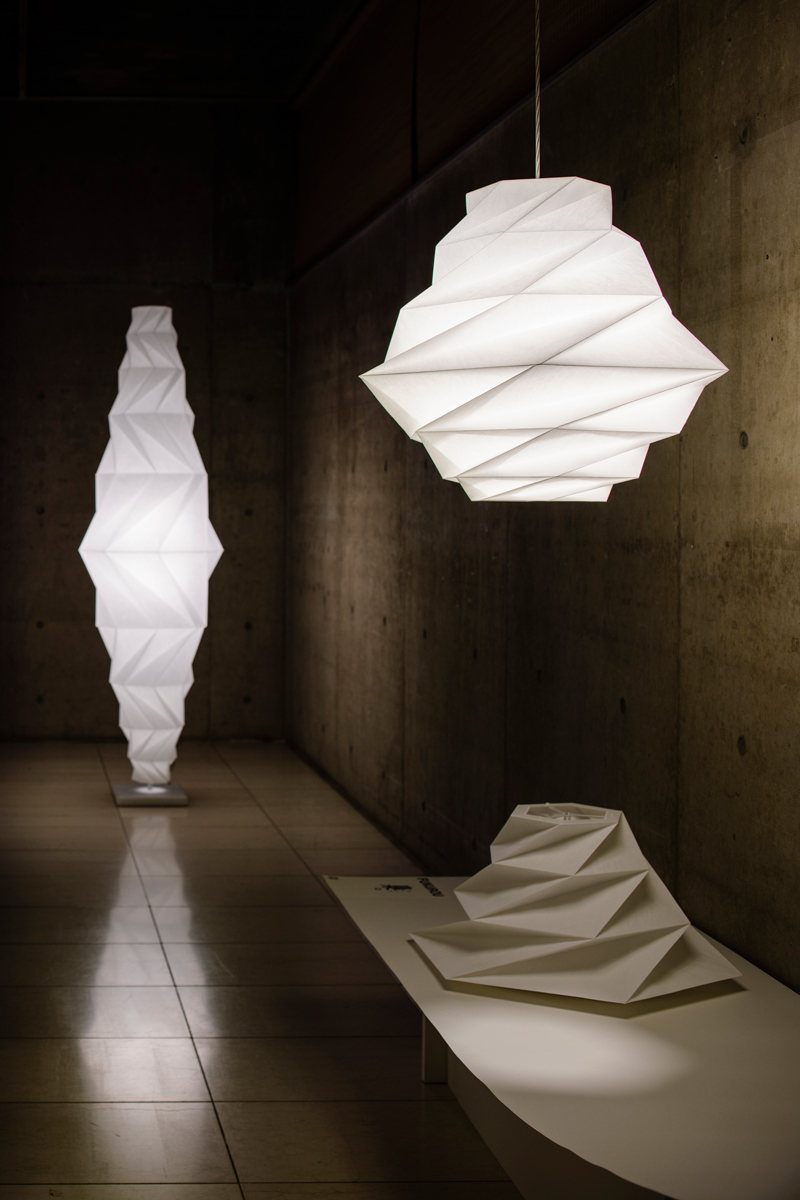
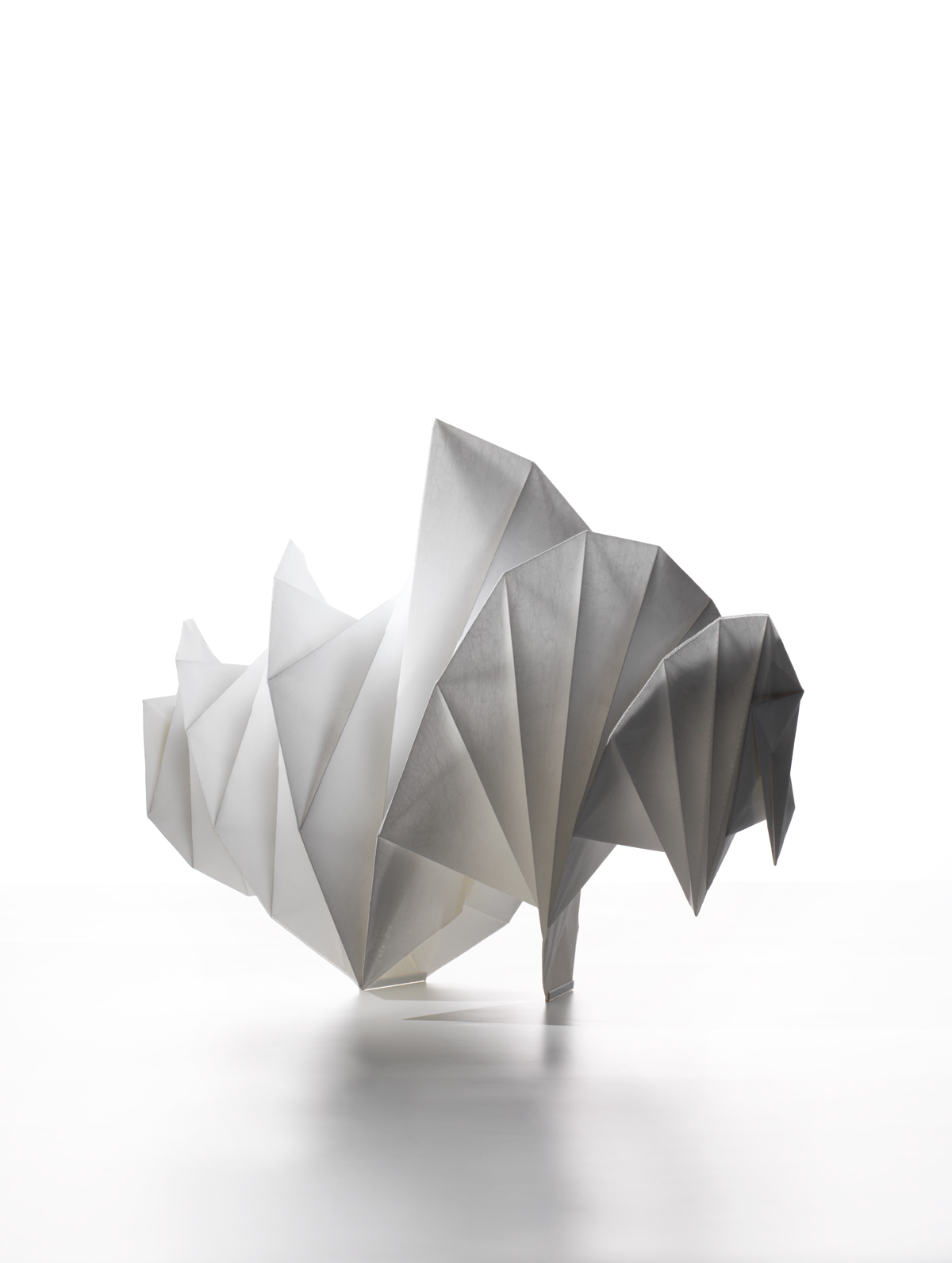
“IN-EI ISSEY MIYAKE,” a lighting fixture developed by Reality Lab. in collboration with Artemide. Photo: Masaya Yoshimura(left)、Photo:Hiroshi Iwasaki(right)
Archive Management and Utilisation
ー I understand that at a certain point, Mr Miyake realised the importance of archiving and began to take it seriously. I hear that you now have dedicated archive staff, making it easy to access his works and related materials.
Kitamura I believe that, above all, archives should not merely be stored and managed, but utilised as a resource for new creative endeavours. With this in mind, we organise and carefully preserve Mr Miyake’s works and materials, and we have staff who maintain a comprehensive overview of the collection and can make the necessary items available when required. Only then does it truly become a living archive, capable of serving as a valuable resource for future generations to create something new.
A superb archive will be passed down for decades, even centuries to come. It stands as a testament to Mr Issey Miyake’s life, and legacy, and I believe that as time goes by, ‘Archive = A Lifetime in Mr Miyake’. Currently, a staff member who has been with MDS for many years serves as our archivist; if someone contacts them saying I’d like to see these specific materials by tomorrow, they ensure they are ready for him or her.
Omori Although the archive is still a work in progress, we’re doing our utmost to catalogue everything and ensure it’s in a usable state. We also consider each request in our archival perspecive and compile and provide materials that we think might be of use. We anticipate that if someone wants to see this, they’re bound to want to see that too, and prepare it accordingly.
Kitamura What’s fascinating about Mr Miyake’s work is that it doesn’t exist in isolation; it’s interconnected in many ways. Eventually, there will be no staff left who worked directly with Mr Miyake and exchanged words with him, but I believe that through the archive, we can continue to understand the essence of his creative process whilst engaging in an ongoing dialogue with him.
ー Was building and utilising the archive also part of his own vision?
Kitamura The Miyake Foundation is the embodiment of his vision. Now that he has passed away, myself and the staff are considering how best to develop the Foundation. The archive is, of course, a key part of this, but the Foundation itself is Mr Issey Miyake, and his creative work must be documented, preserved, and passed on as part of our cultural history.
ー What does Mr Miyake’s archive contain?
Kitamura In terms of physical objects, it consists mainly of garments and accessories from his collections. In addition, there are records of the production process, samples and mock-ups, as well as photographs and magazine articles relating to the works after they were created. The photographs are invaluable resources for us, and those taken by Mr Irving Penn, for example, are masterpieces in their own right. Please ask Omori for further details.
ー To make the most of the archive, did he hold workshops or similar events?
Kitamura Yes. For him, such activities were simply part of the creative process and came naturally.
A creative exploration of the very essence of clothing
ー Mr Miyake’s clothing has always been innovative, but ‘PLEATS PLEASE’ was truly a universal garment that revolutionised the concept of ready-to-wear.
Kitamura ‘PLEATS PLEASE’ is one of the developments stemming from Mr Miyake’s original concept of ‘A Piece of Cloth’. In order to create clothes that everyone could enjoy, much like jeans, we considered how to use affordable synthetic fibres to craft garments of genuine value. This led to the idea of incorporating pleats, and we even devised an entirely new manufacturing process. The conventional method involves tailoring garments from fabric that has already been pleated, but ‘PLEATS PLEASE’ took the exact opposite approach: applying pleats to the garment after it had taken shape. This eliminated fabric waste, made the process more efficient, and ensured consistent quality. Mr Miyake was a clever man who viewed society in this way and considered matters from multiple angles.
Mr Miyake’s approach to clothing design was rooted in the concept of ‘A Piece of Cloth’. It is no exaggeration to say that we are continuing our business today by building on the legacy he left behind.
ー In that sense, Mr Miyake’s ‘Body’*—released in the 1980s—strikes me as rather unique. It seems to draw its inspiration from Western three-dimensional sculpture rather than ‘A Piece of Cloth.’
Kitamura In order to apply the concept of ‘A Piece of Cloth’ to clothing, the existence of the human body—the BODY—is indispensable. If we consider that the body is the foundation upon which a single piece of fabric is draped, the core of the concept remains the same; the body is the basis of clothes-making. Mr Miyake’s earliest works were themed around tattoos.’
* Mr Miyake’s worked on the ‘BODY’ series for several years. It began with the ‘Plastic Body’, presented in the Autumn/Winter 1980 collection, followed by the ‘Rattan Body’ in Spring/Summer 1982, the ‘Wire Body’ in Autumn/Winter 1983, and the ‘Waterfall Body’ in Autumn/Winter 1984. These were brought together in the exhibition ‘ISSEY MIYAKE SPECTACLE: BODYWORKS’, which was held in Tokyo, Los Angeles, San Francisco and London. For Mr Miyake, ‘Body’ was a key concept, inextricably linked to ‘A Piece of Cloth’.
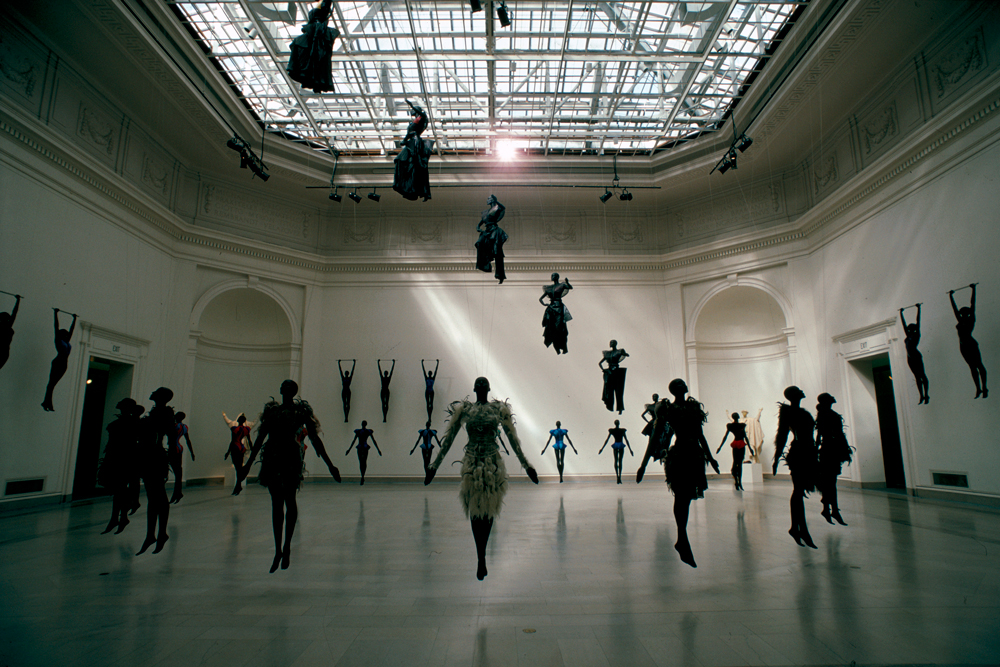
‘ISSEY MIYAKE SPECTACLE: BODYWORKS’ exhibition, San Francisco Museum of Modern Art. The exhibition attracted considerable attention with its striking display of human models clad in the ‘Body’ garments and a variety of mannequins featuring original designs. Photo:FUJITSUKA Mitsumasa
ー What do you think prompted Mr Miyake to take an interest in the body, which was his starting point?
Kitamura Mr Miyake sent a letter of protest in 1960 because fashion design had not been included on the agenda of the World Design Conference held in Tokyo. Then, he set off for Paris to study clothing design. However, he was shocked to find that the attire of the Parisienne he had so admired was bound by traditional values, and he witnessed the May 1968 uprisings. Having experienced this transition between old and new eras first-hand, he began to explore the meaning of wearing clothes and the very essence of what clothing is… setting out on a path to discover his roots as a designer. There is a consistent philosophy underpinning Mr Miyake’s approach to clothing design, one that remains unaffected by the times or passing fashions. By layering each individual process like geological strata, a world as unshakeable as the earth itself is formed.
ー Even among long-established superbrands, creative directors are frequently replaced under the influence of large capital, making it increasingly difficult to preserve a brand’s DNA. Yet even in such times, the essence of your brand remains steadfast, doesn’t it?
Kitamura We have an environment that allows us to focus entirely on creation. For anyone who truly wants to create something exceptional, our company is the envy of many. Underpinning this is the eternal and profound theme of ‘A Piece of Cloth’, which Mr Miyake presented to us.
ー I completely agree. ‘PLEATS PLEASE’ offers casual wear that is as accessible and universal as jeans; ‘A-POC’ is a groundbreaking line where the wearer can participate in the clothes-making process; and ‘132 5.’ anticipates sustainability and upcycling, presenting a range of single-piece garments inspired by origami. Each of these stems from a single piece of fabric and embodies themes sought by the society and its people, rather than mere trends or fashion. He’s foresight in interpreting the future and his ability to put his vision into practice are truly outstanding.
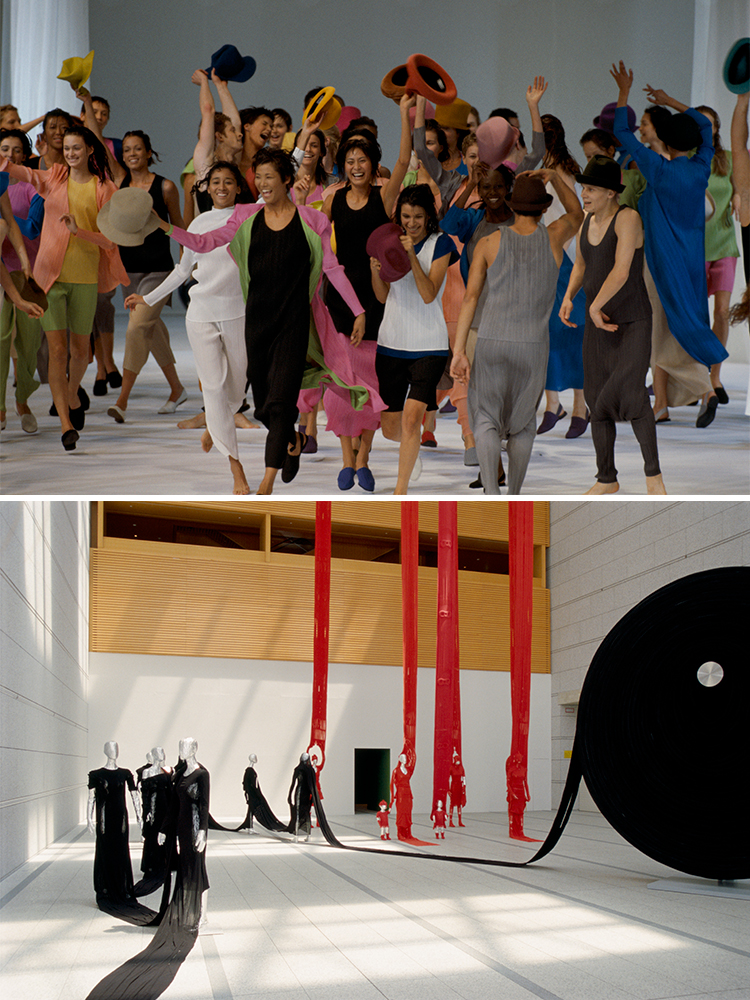
The dynamic ‘PLEATS PLEASE ISSEY MIYAKE’ (1993), the finale of the Paris Collection. Photo:Philippe Brazil (top left)
“ISSEY MIYAKE MAKING THINGS” (2000), ‘A-POC King & Queen’ and the black ‘Just Before’ .at the Museum of Contemporary Art Tokyo. Photo:Yasuaki Yoshinaga (bottom left)
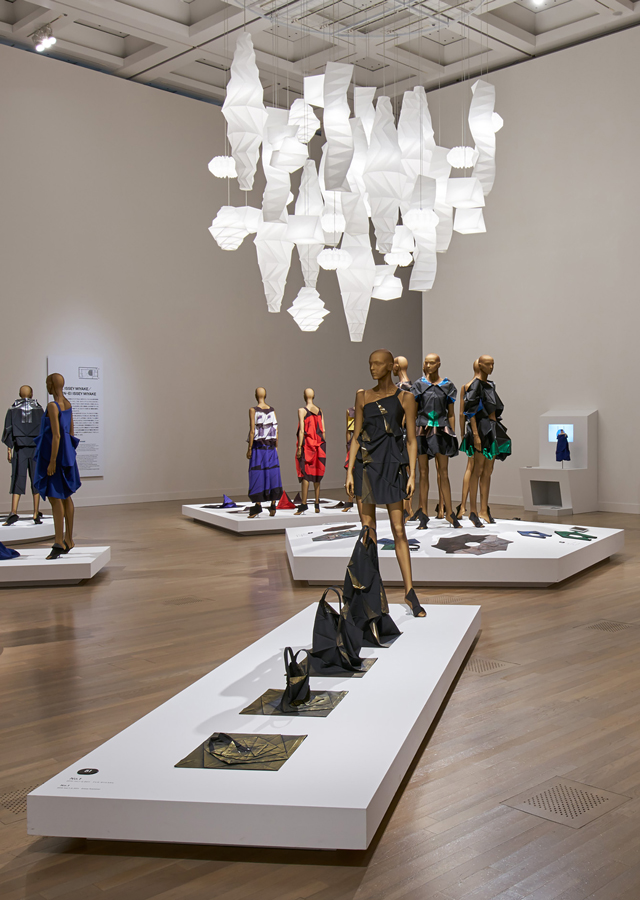
“132 5. ISSEY MIYAKE, EXHIBITION: The Work of Miyake Issey” (2016) at The National Art Center, Tokyo. Photo: Masaya Yoshimura (right)
ー What makes Mr Miyake so remarkable is that, through this innovative approach to clothing design, he has also succeeded in developing talent.
Kitamura I don’t think he thought about that. It was simply that those around him, seeing Mr Miyake in action, worked hard to keep up with him. As a result, people grew. It is not a matter of strategic training. Although it is a workplace with a sense of tension, it is a privileged environment where ‘creating the very best’ is the top priority. However, maintaining this system is predicated on the business running smoothly. I understand there were concerns about what would happen after Mr Miyake’s passing, but I think it is wonderful that the company has overcome those challenges and continues to thrive today.
ー Speaking of business, your brand’s shops have been designed primarily by Shiro Kuramata since the mid-1970s and by Tokujin Yoshioka since the 1990s. I recently visited the ‘ISSEY MIYAKE’ and ‘HaaT’ shops in Kyoto, and I was struck by how skilfully they had renovated the traditional Kyoto townhouses. What struck me was that, whilst branding is the top priority for superbrand shops and they all tend to look the same, the ‘ISSEY MIYAKE’ shop pays attention to the context of the location, giving it a real sense of depth.
Kitamura The spatial design for ‘HaaT’ in Kyoto is by Tokujin Yoshioka. When Mr Miyake asked Mr Shiro Kuramata, “Could you introduce me to someone who can create three-dimensional designs?”, the person he introduced was Mr Yoshioka. We've been through a lot of things together since then, but I believe he is where he is today because of his truly earnest efforts. Mr Yoshioka began working with Mr Miyake, taking charge of accessories for the collections; following Mr Kuramata’s sudden passing, he was entrusted with shop design, and after going independent, he has also handled product design for the brand, such as watches and perfume bottles. Mr Miyake truly nurtured a great many people.
ー What is it that makes Mr Miyake have that gut feeling of ‘This is the one!’?
Kitamura I don’t know, but there must have been something about them. That said, he wasn’t fixated on people of the same type. He was strict, though.
Let’s create a design museum
ー Regarding the making of a Japanese design museum, which Mr Miyake proposed, there are various initiatives underway at present. What are your thoughts on this?
Kitamura I was involved whilst Mr Miyake was alive, but I have no particular connection with it now. The reason is that the design museum was Mr Miyake’s personal vision and aspiration. Now that he has passed away, we as a company, have no intention of taking over it or expressing an opinion on the matter. I believe it is best for those currently working towards its realisation to act according to their own ideas. However, I think Mr Miyake was speaking from a global perspective. Indeed, his words and actions attracted worldwide attention, and a standard that holds up on the global stage is required. We are not in a position to achieve that at present. Our priority is to consolidate our own foundations first: establishing and preserving the Issey Miyake archive is a higher priority.
ー If Mr Miyake were still with us, things might have turned out differently.
Kitamura I do find myself wondering what might have happened if he had been in good health. But establishing a design museum is a monumental undertaking. He wasn’t the sort of person to ask others for donations lightly, and I imagine he would have assessed the situation with foresight and avoided pushing himself too hard. After all, setting up a design museum is such a weighty undertaking that it cannot be achieved easily.
ー Inspired by Mr Miyake’s vision for a design museum, plans for design museums of all sizes are springing up across Japan. Our own initiative aims to create Japan’s first ‘Designers’ Digital Archive’. It is a pity, however, that there is no one with the influence and drive that Mr Miyake possessed in Japan.
Kitamura That’s true. Design embodies the creator’s intentions and stories, and as relationships with various things accumulate, they form history. And a design museum is not simply a matter of gathering works and materials in one place and displaying them. This is because everything that shapes our environment is design, and since design is a living entity, the exhibition itself requires careful thought. Furthermore, constructing a concept that integrates the whole demands a powerful vision and meticulous planning, and the funding and organisational structure to bring it to fruition are indispensable. That is why I cannot simply say, ‘Let’s just go and create a design museum.’
ー Do you have any plans to build on the extensive archives you now have and develop them into the ‘Issey Miyake Design Museum’?
Kitamura We have received various proposals, but I believe we should wait for the time to be right—there is no need to rush. When the time comes, our decision will be based on the question: ‘Would Mr Miyake have been pleased, or would he have disapproved?’ And if the go-ahead is given, I would like to proceed with enthusiasm, and I hope that it will benefit future generations. In fact, even when exhibiting works at external exhibitions, those involved gather together to consider the matter carefully. Now that he has passed away, I am in a position of responsibility where I must decide whether or not to participate in everything from exhibitions to publications.
ー I think there are now more and more young people who haven’t worked directly with Mr Miyake. How do you think his spirit and creative DNA will evolve in the near future?
Kitamura That’s true. There are now many staff members who have never heard Mr Miyake’s voice in person. But that’s only natural; after all, even I can’t live for hundreds of years. (Laughs) That’s precisely why we have no choice but to produce archives, books and videos to pass on his legacy. On the other hand, those who have worked directly with Mr Miyake active in various fields. Through their work, we can learn about his approach to craftsmanship and ensure it is passed on. They have their pockets full of what they’ve received from him, so I hope they’ll pass that on bit by bit to the next generation, and that this will continue. I’m sure Mr Miyake would be delighted to see his ideas expanding through their perspectives. It’s not the works themselves, but the way of working and his philosophy that must be passed on. I imagine the designers are constantly engaging in a dialogue with Mr Miyake in their hearts and minds, and when they find themselves wondering, ‘Is this really the right approach?’, they’ll no doubt revisit the archives.
ー When it comes to succession, there are many long-established businesses in Kyoto, for example, that have been in operation for 300 or 400 years, and these are generally passed down within the family. In that sense, I hope that the ‘ISSEY MIYAKE’ brand—which has no such blood ties—will become a brand that lasts for 100 or 200 years, whilst preserving its creative DNA.
Kitamura I believe it will. Mr Issey Miyake is highly regarded worldwide, and he is even more respected now that he has passed away. That is the result of Mr Miyake’s 50 years of consistently producing great work.
ー Nowadays, the world—including the fashion industry—is shifting towards a profit-first mindset, so brands that prioritise craftsmanship are a rare commodity. Listening to you, I have reaffirmed that the success of the ‘ISSEY MIYAKE’ brand is the ‘result’ of continuing to create fine products.
Kitamura That is exactly right. We are where we are today because we have consistently met people’s expectations and delivered creativity that exceeds them. Some time ago, Ms Eiko Ishioka remarked, “Your clothes are so durable and never go out of fashion that I can’t bring myself to buy anything new!” To which Mr Miyake replied, “Eiko, in that case, why not just put those clothes away and buy something new?” The two of them used to laugh about it together.
ー Speaking of which, as today’s theme is ‘archives’, I’ve come wearing a chiffon twist blouse from the early 1990s. I’ve been wearing it for over 30 years now, and as it’s reversible, I love taking it with me when I travel.
Kitamura It really does make me happy to hear you’ve been wearing it for over 30 years; it reaffirms that our company creates truly wonderful things. The key is how to sustain that, and I intend to keep watching over it. Even now, I always take a look at the clothes we’re presenting in the collection before they’re sent off to Paris. Perhaps I don’t need to check them myself, but I wonder if everyone feels reassured when they show them to me; a young designer is due to come and show me something tomorrow as well.
ー In such cases, do you offer advice by imagining what “Mr Miyake would surely say”?
Kitamura Sometimes I do that, and other times I simply give my own opinion.
ー Do you ever say things like, “This is how it ought to be”?
Kitamura That’s not the case. Everyone has their freedom, and if it suits the times and is a good thing, it’s not for me to interfere. However, when we release something under the ‘ISSEY MIYAKE’ brand, I am particular about whether the finished product is something everyone can take pride in. After all, that is what enables the business to succeed and continue.
ー Today, I wanted to hear about the image of Mr Miyake as seen by you, Ms Kitamura, who has walked alongside him for 50 years. There are already many books, newspaper and magazine articles, videos and television programmes about him. However, I felt certain that through your words, we would discover a new side to the great designer Issey Miyake, and today, under the theme of archives and succession, we would surely make some new discoveries.
Kitamura Yes, I could never fully describe Mr Miyake character or his work over these 50 years. I have been under his wing for 50 years, and it would be no exaggeration to say I have devoted my entire life to him, yet it is impossible for anyone to fully capture ‘Issey-san’. What’s more, whilst we refer to the archives for exhibitions and book projects, even clothes from 50 years ago don’t feel dated at all; they remain fresh today, and that is truly what makes Mr Issey Miyake’s clothes so exceptional. It is because there is that universal principle of ‘A Piece of Cloth’. We don’t chase trends in materials or design; instead, we develop everything ourselves from scratch… even now. That is precisely why we are where we are today.
ー I am truly grateful for this opportunity. I wish you every success of ISSEY MIYAKE brand in the future.
Interview 2
Interview 02:January 28, 2026, 1:30 PM–3:30 PM
Location: THE MIYAKE ISSEY FOUNDATION, Koto Ward Office
Interviewees: Masako Omori, Masataka Teruya
Interviewer: Yasuko Seki
Author: Yasuko Seki
The Issey Miyake Archive
Following the conversation with Midori Kitamura, we spoke about Issey Miyake’s design archive with Masako Omori, who currently serves as the archives director THE MIYAKE ISSEY FOUNDATION, and staff member Masataka Teruya.
The office we visited in Koto Ward warehouse as an archival storage facility; its massive space was meticulously organized, packed with nearly 20,000 pieces of work and reference materials. It was a truly immersive interview that brought the archive's vivid presence to life.
The Background of the Miyake‘s Archive
ー I understand that you have been working on organizing the archive, centered on Mr Issey Miyake, since around 2000. I would like to ask Ms Omori, in your capacity as Archives Director, about the current state of Mr Miyake’s archive and how it is being utilized to contribute to the development of global fashion and culture. First, could you tell us about THE MIYAKE ISSEY FOUNDATION, which oversees the archive?
Omori THE MIYAKE ISSEY FOUNDATION was established in 2004 with the approval of the Agency for Cultural Affaires, and in 2011, it was certified by the Cabinet Office as a public interest incorporated foundation. Our primary roles are to organize, preserve, and build an archive of the design work created by Mr Issey Miyake for widespread use, and to carry out the activities of 21_21 DESIGN SIGHT (hereinafter 21_21) in Roppongi since 2007. Through these efforts, we aim to contribute to the development of design culture and society that enriches people’s lives.
ー Mr Miyake, he opened a gallery (designed by Shigeru Ban; later known as MDSG) in 1994 and organized various exhibitions there. Did those activities lead to the establishment of the foundation?
Omori The gallery opened in 1994 as an initiative of the Miyake Design Studio (hereinafter MDS). In 1998, the name was changed to MDSG, and the gallery began hosting exhibitions and events featuring designers and artists from Japan and abroad. In 2004, THE MIYAKE ISSEY FOUNDATION took over and continued these activities until 2005.
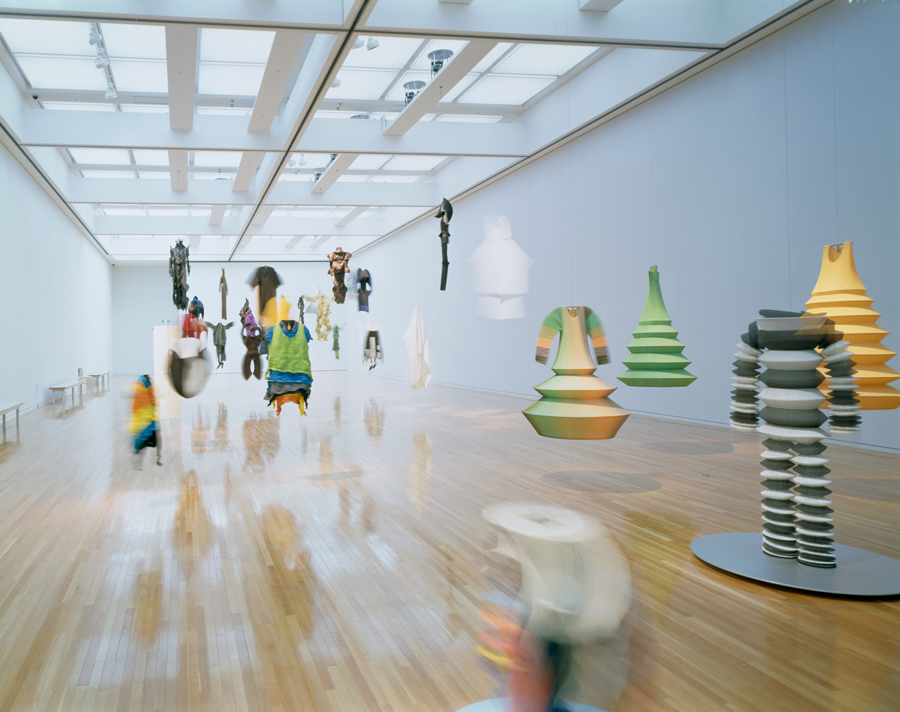
Long before this, Mr Miyake had been involved in the development of design culture not only through clothing design but also through curating exhibitions and other initiatives. For example, deeply impressed by the “Inventive Clothes 1909–1939” exhibition that he saw in New York in 1976, he recreated it in Kyoto as the “Origins of Contemporary Clothing” exhibition; he also introduced performances by the contemporary dance company “Momix,” and in 1991, he held the “ISSEY MIYAKE MEETS LUCIE RIE” exhibition. In addition,’ ISSEY MIYAKE’ held the “ISSEY MIYAKE SPECTACLE: BODY WORKS” in 1983, the “ISSEY MIYAKE A UN” exhibition in 1988, and the subsequent “ISSEY MIYAKE MAKING THINGS” exhibition in 1998, which traveled from Fondation Cartier pour l’art contemporain in Paris to New York. In 2000, the “ISSEY MIYAKE MAKING THINGS” exhibition was held at the Museum of Contemporary Art,Tokyo. These activities were consistently aimed at advancing design culture.
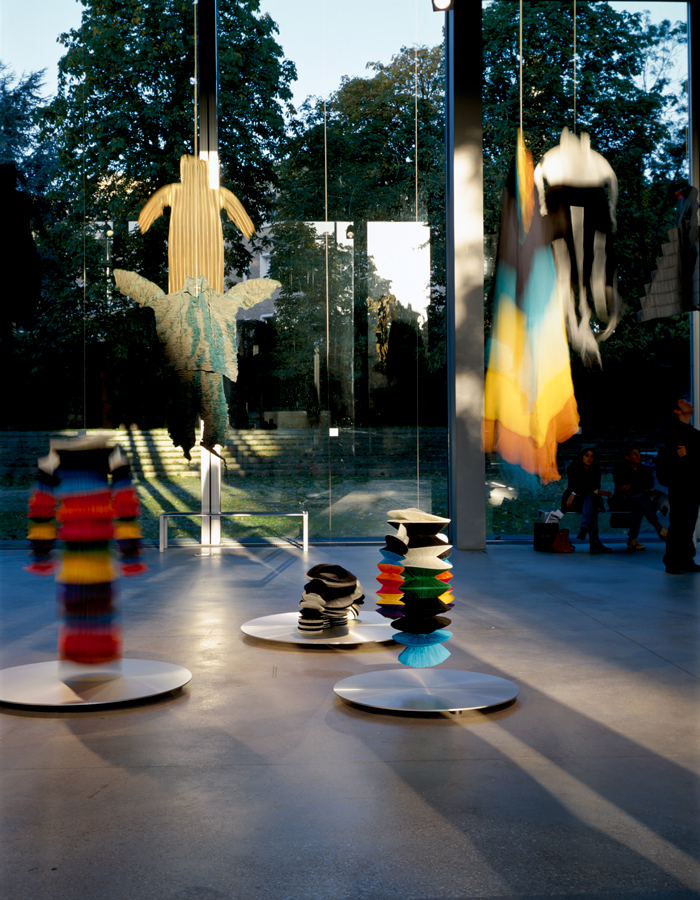
“ISSEY MIYAKE MAKING THINGS” Exhibition (1998), Fondation Cartier pour l’art contemporain, Paris. Photo: Yasuaki Yoshinaga
“ISSEY MIYAKE MAKING THINGS” Exhibition (2000), Museum of Contemporary Art,Tokyo. Photo: Yasuaki Yoshinaga
ー Where are Miyake’s archives currently organized and preserved, and in what form?
Omori As of now (at the time of this interview in January 2026), THE MIYAKE ISSEY FAOUDATION is responsible for Mr Miyake’s design works dating back to 1970 and the various related materials. We are currently storing them at two locations, but last year a facility equipped with a storage vault—which will serve as the foundation’s operational base—was completed. After a period of curing the building, we plan to move the important works and materials there soon.
ー Before THE MIYAKE ISSEY FOUNDATION took on the task of managing the archive, how did MDS store the works and other materials?
Omori After presenting a collection and its subsequent activities, MDS would store and manage the many garments that had been kept in cardboard boxes. Around 1990, we began organizing them to create a database and updated our method by bespoke new stackable plastic-reinforced cardboard boxes, which we stored using specialized carts with casters. We still follow this method today. Prior to the foundation’s establishment, the organization and storage work was carried out by MDS staff in charge of administration, public relations, and designers and technicians.
ー Could you tell us specifically what is actually archived?
Omori The collection consists of pieces from the ISSEY MIYAKE collections presented in New York and Paris, along with related materials. The pieces include clothing and accessories, with accessories encompassing hats, eyewear, shoes, socks, bags, and more. Currently, the collection holds approximately 10,000 items of clothing and 10,000 accessories, for a total of about 20,000 items. In addition, the collection includes ‘ASHA BY MDS’, ‘ISSEY MIYAKE PERMANENTE,’ ‘Plantation,’ ‘PLEATS PLEASE ISSEY MIYAKE,’ ‘A-POC, ISSEY MIYAKE MEN,’ as well as projects Mr Miyake presented outside of the brand. The materials range widely, including design sketches, textile books, patterns, sewing instructions, sales book illustrations, and production files created during the clothes-making process, as well as printed materials such as collection invitations, press photos and video footage, and media coverage. Among these are items of intrinsic value, such as photographs taken by great photographers.
ー I believe the core of the archive consists of the clothing pieces themselves. What process is used to organize and store them?
Omori We began organizing the Miyake Archive in earnest in 2000, following the aforementioned exhibition at the Museum of Contemporary Art,Tokyo. About twice a month, we set aside time for ‘Miwake’ (the curation and sorting )‘ (hereinafter Miwake) and, together with Mr Miyake and Ms Kitamura, reviewed one or two seasons’ worth of work from each of the past 30 years. This sorting process continued for several years.
ー What kind of work was the ‘Miwake’ that Mr Miyake and Ms Kitamura participated in?
Omori First, we took all the pieces stored in boxes out, hung them up for review. Mr Miyake then coordinated them onto dressed mannequins, just as he would when preparing for a collection presentation. Based on that, he made judgments such as, “what is essential and what could be donated.” At that time, Mr Miyake himself made decisions on the spot: for important pieces like “Kamiko”( paper garment) series, it was decided to preserve every single item; whereas for fabrics available in multiple colors, only the white pieces were selected to highlight the concept of the clothes. As a result of this ongoing work, by 2016—the year the “MIYAKE ISSEY EXHIBITION: The Work of Miyake Issey” was held at the National Art Center, Tokyo (Roppongi),the Miwake process had been completed, up to the Fall/Winter 1999 collection had been completed, and the pieces from the 1970s had undergone a second review.
ー Did Mr Miyake personally dressed mannequins in his vast collection of designs to evaluate them?
Omori That’s right. Since the concept of Mr Miyake’s clothing is revealed only when it is put on a body, it was crucial to check trying the clothes on mannequins. As he dressed the mannequins himself, he would explain details about the materials, design, and construction—saying things like, “This fabric is thin, so I gathered the tucks at the back.” The way Mr Miyake dressed the mannequins, his handling of the fabric, and the words he spoke at that time are an irreplaceable archive for us. Everyone frantically took notes.
ー I can really sense his strong passion for the archive.
Omori Not only the archive staff but also the brand’s designers and technical staff participated in this ‘Miwake’ process. For the archivists, this process served as an opportunity to learn the criteria for selecting pieces, while for the brand’s planners, technicians, and designers, I believe it was a valuable time to learn about garment construction directly from Mr Miyake.
ー So his approach to garment construction was truly passed down and handed on right there on the design process. And now, even after Mr Miyake’s passing, those archival guidelines continue to be upheld.
Omori The ISSEY MIYAKE brand has been adding each season’s collection to its archives from Mr Miyake’s time to the present. In doing so, just as Mr Miyake himself carefully selected the pieces to be archived, I believe it is important to include works that incorporate new materials and techniques developed or refined in line with his clothing design concepts.
Currently, staff from the Miyake Foundation, along with the brand’s designers, technical staff, and public relations team, are laying out all the garments presented in the collections to review them. The foundation staff, in particular, are proceeding by carefully examining the characteristics of each selected garment one by one.
ー I understand that in addition to the garments, there are materials such as sketches, photographs, magazines, and textile files. Among these, what would you say is most characteristic of the Miyake Foundation?
Omori Since ‘ISSEY MIYAKE’ brand develops its own textiles, we have a vast collection of textile-archives. For example, The so- called “50cm Cut” textile (pieces of fabric cut to a width of about 50 centimeters) are particularly useful resources; they allow us to examine and study the dyeing, weaving, and texture of the fabric without needing to pull out the clothes from the storage. In addition, the thick seasonal textile files serve as valuable records that trace the production process—tracing the origins, where the fabrics were woven and dyed.
ー Do the archives include any handwritten notes or sketches by Mr Miyake?
Omori Since the everyday notes and journals of Mr Miyake, Ms Kitamura, and other designers contain personal content, they are not currently managed as part of the Miyake Foundation’s archive. However, we have received and are preserving items from Ms Kitamura, a set of notebooks used during the fitting process for the collection, each note with small sketch templates and tiny fabrics attached together with her handwritten notes.
ー Mr Miyake collaborated with many artists, so there must be some unique materials.
Omori We hold a collection of the Paris Collection invitations designed by artist Tadanori Yokoo. He has continued to create these designs from 1977 to the present, and they form a valuable part of THE MIYAKE ISSEY FOUNDATION’s archives. Alongside the invitaitons, the exhibition featured Mr Yokoo’s original art work used in the invitation design and clothes by Mr Miyake incorporating Mr Yokoo’s print desgin. In 2005, shortly after the Foundation was established, the exhibition “Tadanori Yokoo Invites: Issey Miyake Paris Collection 1977→1999” was held at the Toyama Prefectural Museum of Modern Art, providing the general public with an opportunity to view them. Other unique items specific to the Miyake Foundation include photographs taken by Mr Irving Penn and posters designed by Mr Ikko Tanaka and produced every season (1987–1999).
ー Press materials and photographs also hold value as archival items, don’t they?
Omori Yes. We also have a large number of materials related to the collections and events. These include positive film and prints documenting the collection shows, as well as video footage. We also preserve articles and videos published in magazines and online as much as possible. For print media, we not only file the articles but also keep two copies of the originals for preservation and future use, especially for particularly important pieces. In addition to archival photos, the collection of works photographed by Mr Irving Penn, Lord Snowdon, Mr Kishin Shinoyama, Mr Kazumi Kurigami, and many other photographers is a valuable asset.
The Miyake Foundation’s Archiving System
ー Are Ms Omori and Mr Teruya currently the only two full-time staff members handling archiving work?
Omori We have three full-time staff members dedicated to the works (clothing and accessories), plus one part-time staff member responsible for sewing restoration and maintenance, for a total of four people. In addition to archiving the documents, the four of us—including Teruya and myself—handle internal and external exhibition projects, loaning works to various museums, and taking care of media relations.
ー The way the works appear when loaned to external venues can vary depending on the exhibition method.
Omori That’s correct. Since the way Mr Miyake’s clothing appears and how it is perceived changes depending on the exhibition method, we take the time to work out the details with the borrower. We consider every detail—such as the choice of mannequins, how they are exhibited, how to put clothes on, lighting, and spatial design—and proceed with the loan process after conducting simulations. That’s when the archival documentation become crucial.
ー I imagine this kind of coordination naturally extends to MDS designers and other internal teams as well. Ms Kitamura once said, “I believe it is most important that archives be utilized not only for storage and management but also as a resource for new creative endeavors.”
Omori Yes. That is exactly how I feel.
ー Do you also cater to the general public, including students, curators, and researchers?
Omori As a public interest incorporated foundation, public outreach is essential for us, but we currently view 21_21 as fulfilling that role. In terms of our archive outreach, we organize exhibitions and publish books following several years of preparation. Regarding inquiries about the archives, we do provide access to materials and information to art museums, research institutions, and researchers, but we have not yet expanded these activities to the general public through our website or exhibitions. We are now transitioning from the era of working directly with Mr Miyake to the next phase, and as Ms Kitamura mentioned, we are currently holding frequent meetings to plan public outreach activities while deepening our own understanding of Issey Miyake’s clothing designs.
Archives, Digital Technology, and AI
ー Digitalization and the adoption of AI are currently advancing in the design field, bringing significant changes to archives as well. What are THE MIYAKE ISSEY FAOUDATION's initiatives in this area?
Omori It’s true—as we proceed with our work, we’ve noticed a decrease in records and documents dating from 2000 onward. Prior to that, we had not only memos and notebooks but also files such as faxes, which allow us to understand the nature of communication at the time. While the Foundation is moving forward with digitizing materials, we also carefully preserve the originals. This is because, while digitization makes the materials easier to access and to use, we believe there is a great deal of information that can only be obtained from the originals.
ー I imagine THE MIYAKE ISSEY FOUNDATION has a large collection of video materials, such as footage from Paris Fashion Week and interviews with him.
Omori We prioritized digitizing important and older footage, but compared to current standards, the image quality was not very good. Since maintenance and inspections for the video equipment have ended, we must accelerate the digitization of video footage. For footage of high importance to the Foundation, such as collection videos, we have performed a second round of digitization using new technology.
ー It seems that AI is now being used to compensate for issues like deterioration over time...
Omori A company we’ve commissioned to digitize footage once presented us with a test case featuring AI-processed images. At the time, however, we couldn’t shake the impression that it looked fake—the model’s face and the colors were slightly off. The representative said it would improve if they trained the AI on more historical photos, but we didn’t think it was ready for full-scale use yet. That said, we believe that mastering the use of technology will be a key challenge for our future archival work.
ー I believe THE MIYAKE ISSEY FAOUNDATION's archives are exceptionally comprehensive. I attribute this to Mr Miyake’s unwavering sense of mission, not only as a creator but also as an industrialist, business leader, and cultural figure. While there are challenges ahead, I have high hopes for the future. Thank you very much.
After the interview, I was given a tour of the storage facility. It was a vast, air-conditioned space, where the collection was organized and stored into two main categories: garments and accessories, and reference materials (patterns, textile samples, magazines and various other materials). The works were generally organized chronologically and divided into clothing and accessories. The clothing was sorted by design and fabric and stored in two ways: either hung on hangers or packed in boxes. Each item was assigned an ID number indicating its era (collection) and season. Particularly important pieces were housed in custom-made boxes made of acid-free paper. Archival materials, such as pattern drawings and textile samples, were filed and sorted by type and era, while books and magazines were categorized by title and era and stored on shelves. THE MIYAKE ISSEY FOURDATION's efforts to organise its vast archive, utilise it as a resource for future creative work, and contribute to the advancement of design culture are a prime example of a design archive. With the relocation scheduled for the spring of 2026 , the collection is expected to undergo further refinement.
Location of the Issey Miyake Archive
Contact Information
THE MIYAKE ISSEY FOUNDATION

Home Archive Communication Education Exchange Proposal Research Company Membership Contact
Copyright © PLAT. All rights reserved